A lithium-ion battery should not go into household trash or a municipal recycling bin. An intact battery needs a specialized route and protected terminals before a confirmed handoff. If it is swollen, hot, punctured, leaking, odorous, smoking, or on fire, stop using and charging the device: do not tape, bag, squeeze, or transport it yourself.
The decision depends on two questions: is the battery intact or damaged, and is it installed in a device that may still be reused? A complete phone or laptop may be suitable for evaluation and donation. A loose or damaged battery requires specialized handling. Crezendo should not be treated as an automatic collection point for the latter.
First: identify an emergency
Observe without handling. Treat the situation as urgent if the battery or device:
- emits smoke, sparks, or flame;
- is extremely hot or heating rapidly;
- hisses, crackles, or produces an unusual odor;
- releases liquid or vapor;
- swells rapidly;
- suffered severe impact, puncture, or crushing and is reacting.
If there is intense heat, smoke, hissing, or fire, move away, keep other people out of the area, and call emergency services. Do not attempt to pick it up, carry it outside, cover it, cool it, open it, or extinguish it with an improvised method. Tell responders that the incident involves a lithium battery or a battery-powered device.
If it is swollen or otherwise damaged but not actively reacting, stop using and charging the device. Do not press the case closed or try to remove an integrated battery. Ask the manufacturer, relevant authority, or a specialized handler for instructions appropriate to the model and your location before moving it.
The EPA explains that swelling indicates damage and a potential fire hazard. Normal terminal-isolation guidance is intended for intact batteries; it does not justify touching one that is hot, leaking, or deformed.
Before recycling: can you donate the complete device?
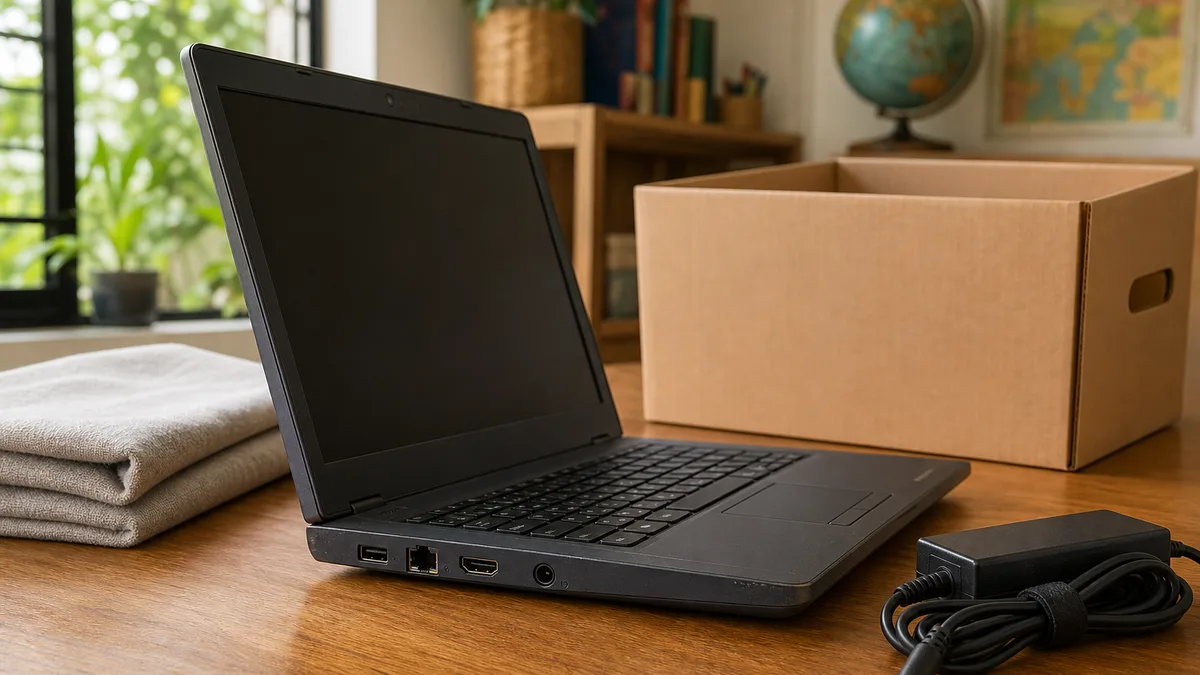
If the battery is installed, shows no damage, and the phone, laptop, tablet, tool, camera, or console still works or can be evaluated, keeping the device complete may be preferable to removing the battery unnecessarily. Many modern products are not designed for user battery removal.
Prepare the following for a donation inquiry:
- device brand and model;
- exterior photographs without opening it;
- battery condition and approximate known runtime;
- power, charging, display, keyboard, and port condition;
- available charger and accessories;
- prior repairs and known faults;
- confirmation that data was backed up and erased, if possible.
Visit Donate Technology to Crezendo and describe the case. Crezendo must confirm whether the equipment fits its scope and how to proceed. Do not bring a loose, swollen, or damaged battery without specific confirmation, and do not assume pickup, recycling, repair, or automatic acceptance.
If you are deciding about a whole computer, read how to prepare a desktop computer for donation. For the broader hardware path, see the guide on donating electronic equipment in Panama.
How to identify a lithium battery
Look for terms such as Li-ion, Lithium-ion, Li-poly, LiPo, lithium polymer, or a battery symbol that names the chemistry. Photograph the label without covering it; model, voltage, and capacity help the receiving organization classify it.
Not every battery is the same:
- Rechargeable lithium-ion: common in phones, laptops, tablets, cameras, controllers, tools, and power banks.
- Lithium polymer: a rechargeable variant often used in thin devices; it is frequently integrated or enclosed in a flexible pouch.
- Lithium metal: often a non-rechargeable primary cell, including certain coin or camera batteries.
- Lead-acid or gel: common in UPS systems, alarms, and vehicles; it uses a different chemistry and management route.
- Nickel-metal hydride or alkaline: found in rechargeable or disposable cells and should not be classified by size alone.
A recycling symbol does not mean the battery belongs in household recycling. EPA notes that it must go to a specialized battery recycler or program that accepts that chemistry. In Panama, verify what an organization receives before traveling there.
Intact, loose, and cool battery: basic preparation
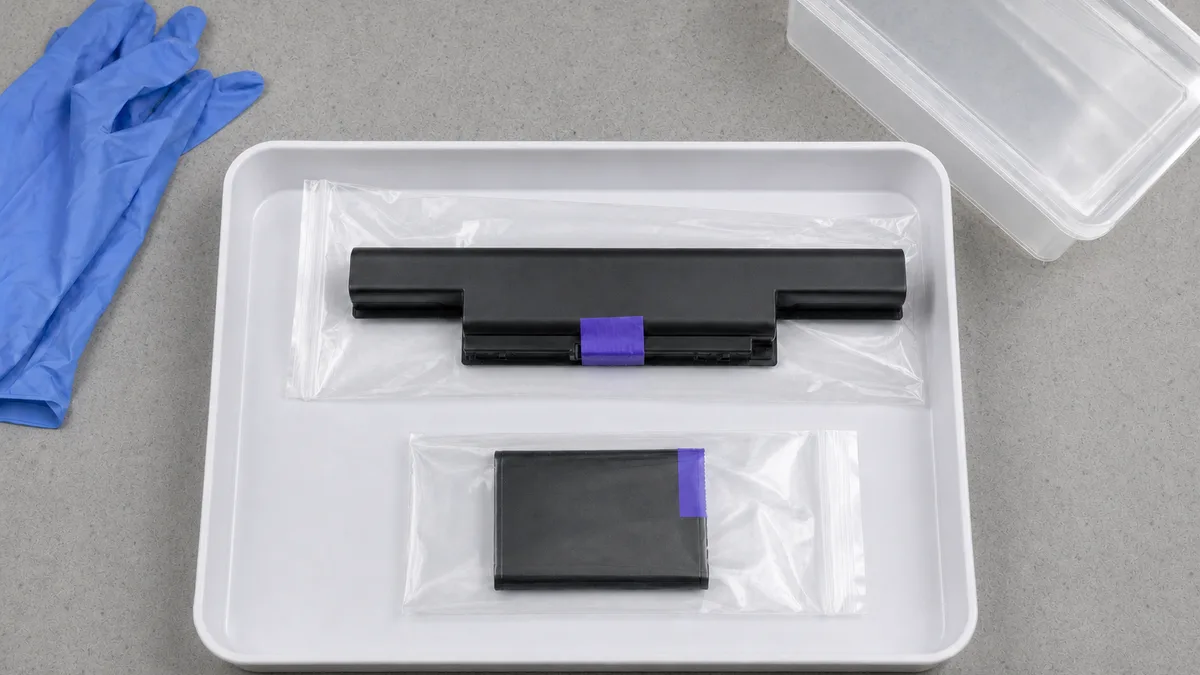
This section applies only when the battery is intact: no swelling, puncture, leakage, corrosion, odor, abnormal heat, or visible damage. EPA guidance for used lithium-ion batteries recommends preventing short circuits in either of two ways:
- cover exposed terminals with nonconductive tape, such as electrical tape; or
- place each battery in its own plastic bag.
Keep the label visible and prevent contact with metal, keys, coins, tools, or other batteries. Do not use metallic tape. Do not connect a resistor, light, or appliance to “drain” the battery; improvised discharging is unnecessary.
Store it temporarily at room temperature, away from direct sunlight, heat, moisture, children, pets, and combustible material. Do not leave it in a vehicle. Temporary storage should last only while you confirm a receiving route; a household box is not a permanent battery collection site.
Transportation: confirm before moving
A used battery can retain enough energy to short-circuit or ignite. Before transport, ask the receiver:
- whether it accepts lithium-ion and the exact format you have;
- whether it accepts a loose battery or requires the complete device;
- whether it handles consumer cells, power banks, or laptop packs;
- how terminals and packaging must be prepared;
- whether quantity or energy limits apply;
- what procedure applies to damaged or recalled products;
- when and under what conditions the item can be received.
Do not send it through mail, a courier, or aircraft as an ordinary package. PHMSA warns that damaged batteries present greater risks and face special transportation requirements. Although those rules are from the United States, they demonstrate why an improvised shipment is not safe advice: follow applicable Panamanian requirements and the authorized carrier's or receiver's instructions.
For an intact battery accepted locally, prevent movement inside the vehicle, protect its terminals, and go directly to the confirmed destination. If its condition changes—heat, odor, deformation, or noise—do not continue as if it were an ordinary parcel; move away and seek emergency assistance.
Differences by device
Phones and tablets
The battery is usually integrated. If the device lies flat, remains cool, and works, do not open it just to remove the battery. Back up and erase data, then ask about donating the complete device. A lifted screen or back cover may indicate swelling: turn it off, do not charge it, and request instructions before moving it.
Laptops
Some have an external user-removable battery; others require disassembly. Remove only one that the manufacturer designed for user removal, and only when it is intact. If the case is a laptop, apply this same guide: distinguish first between an intact and a damaged battery, and do not open the device when battery removal is not intended for the user.
Power banks
These are battery packs, not simple plastic accessories. Do not open them or attempt to discharge them by repeatedly connecting devices. If deformed, separating at the case, or heating while idle, stop charging and ask for a specialized route.
Smartwatches and earbuds
Their batteries are small and integrated. Do not use tools to extract them. The guide on what to do with an old smartwatch helps distinguish keeping the whole device, asking about donation, and end-of-life handling.
Consoles and controllers
A console may not contain a main battery, but its controllers can. Inventory each separately. For other entertainment equipment, see how to donate or recycle an old console.
E-bikes, scooters, and energy systems
Large packs require manufacturer or specialist instructions. Do not handle them as phone batteries or transport them using this basic guide. Do not open the pack, disconnect internal modules, or improvise a destination.
What not to do
- Do not place batteries or battery-powered devices in household trash.
- Do not put them in municipal paper, plastic, glass, or metal recycling.
- Do not puncture, bend, crush, open, or try to “deflate” a battery.
- Do not freeze, wet, bury, burn, or leave it in the sun.
- Do not repair cells or solder terminals without appropriate competence.
- Do not collect exposed terminals with metal objects in the same box.
- Do not charge a swollen, hot, punctured, or leaking battery.
- Do not transport a damaged battery without specialized instructions.
- Do not remove an integrated battery merely to satisfy a donation.
- Do not assume a site that receives lead, gel, or common cells accepts lithium-ion.
Frequently asked questions
Where can I recycle lithium batteries in Panama?
Ask the relevant authority or a specialized handler and confirm the chemistry, format, condition, and date before going. This guide does not maintain a list of collection sites because acceptance, requirements, and hours can change.
Does Crezendo accept loose batteries?
Do not assume so. /donate is a way to ask about complete technology equipment subject to evaluation. A loose or damaged battery needs explicit confirmation and may require a different specialized route.
Should I remove the battery before donating a phone or laptop?
Not when it is integrated or removal requires opening the device. If it is healthy, disclose that it remains installed. If it is swollen or damaged, do not bring the device without specific instructions.
Can I tape a swollen battery?
Do not apply intact-battery instructions to a damaged one. Stop using and charging it, avoid handling, and request guidance. If there is intense heat, smoke, hissing, or flame, move away and call emergency services.
Do all batteries go to the same collection center?
No. Lithium-ion, lithium metal, lead, gel, nickel, and alkaline are different categories. Check the label and verify exact acceptance.
Checklist
- I identified the device and chemistry without opening the pack.
- I confirmed there is no heat, swelling, leak, odor, puncture, or active reaction.
- If damaged, I stopped using it and requested instructions before moving it.
- If intact and loose, I isolated terminals or bagged it individually.
- I kept the label legible.
- I confirmed the receiver accepts that exact category and condition.
- I did not confuse a device donation with loose-battery collection.
- I prepared transport under current instructions, without mail or improvisation.
If the complete device works, its battery is healthy, and it may have a second life, ask Crezendo before removing or recycling it. If the battery is loose or damaged, prioritize a specialized, confirmed route; safety comes before completing a handoff.