A computer sitting in storage does not create impact on its own. It can begin to do so when its condition is assessed honestly, its data is protected, it still has a viable use, and it is matched to a specific need. Donating used technology is therefore more than moving a device: it is the process of turning unused capacity into a tool someone can use safely.
Why donating used technology can create social impact in Panama
Connectivity and access to a suitable device are not the same. Panama's INEC 2023 Census reported that, among people age 4 and older, 68.5% had used the internet and 36.0% had used a computer. “Had used” does not mean owning a device, having regular access, or possessing digital skills, but the difference helps explain why an available connection does not guarantee a suitable tool for studying, writing documents, programming, or building technical skills.
A reusable device can support several goals:
- practicing productivity software, programming, design, or repair;
- preparing assignments, résumés, and portfolios;
- equipping a lab or learning space;
- preserving technology with technical or historical value;
- supplying components for diagnostics and hands-on practice.
The outcome depends on the equipment, the context, and the support available. A donation alone cannot guarantee better grades, employment, or income, but it can remove a material barrier to learning and practice.
From stored equipment to a useful tool
The best question is not just “Does it turn on?” but “What can it safely be used for?” A laptop with a worn battery may still work while connected to power in a lab. An older network switch may not belong in production but may retain value for configuration practice. A retro console or computer may support learning, preservation, or diagnostics. Even incomplete equipment can provide useful parts when its condition is disclosed before delivery.
This approach avoids two opposite mistakes: discarding useful hardware too early and transferring an unsafe, locked, or unusable device to someone else. If you do not know the equipment's condition, request an assessment before deciding.
A responsible chain: assessment, data, and possible reuse
A well-planned technology donation involves several separate decisions:
- Inventory and condition. Identify the make, model, accessories, known faults, firmware passwords, and visible damage. A swollen battery, burnt smell, or corrosion must be disclosed and handled cautiously.
- Information protection. Back up anything you need, sign out of accounts, and remove activation locks. NIST SP 800-88 Rev. 2 explains that sanitization should make access to data infeasible for the expected level of effort; deleting files or performing a superficial reset does not always sanitize the media.
- Technical assessment. Determine whether the device can be used, reasonably repaired, used for practice, or safely dismantled.
- Purpose and destination. Match its capabilities to a plausible use instead of promising a beneficiary or outcome before evaluation.
- Recordkeeping. A simple list may be enough for a personal donation. A company should retain an inventory, asset or serial numbers when applicable, declared condition, date, and the person responsible for the handoff.
For device-specific privacy advice, see how to donate a used laptop safely.
What used technology may retain educational or technical value
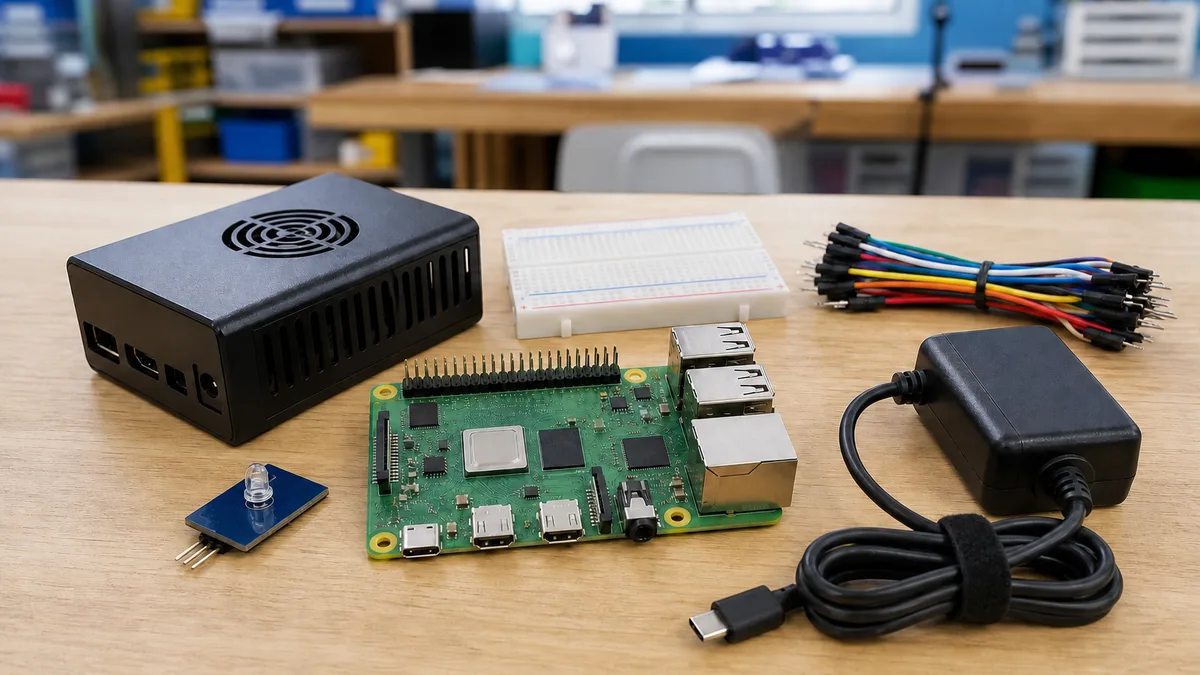
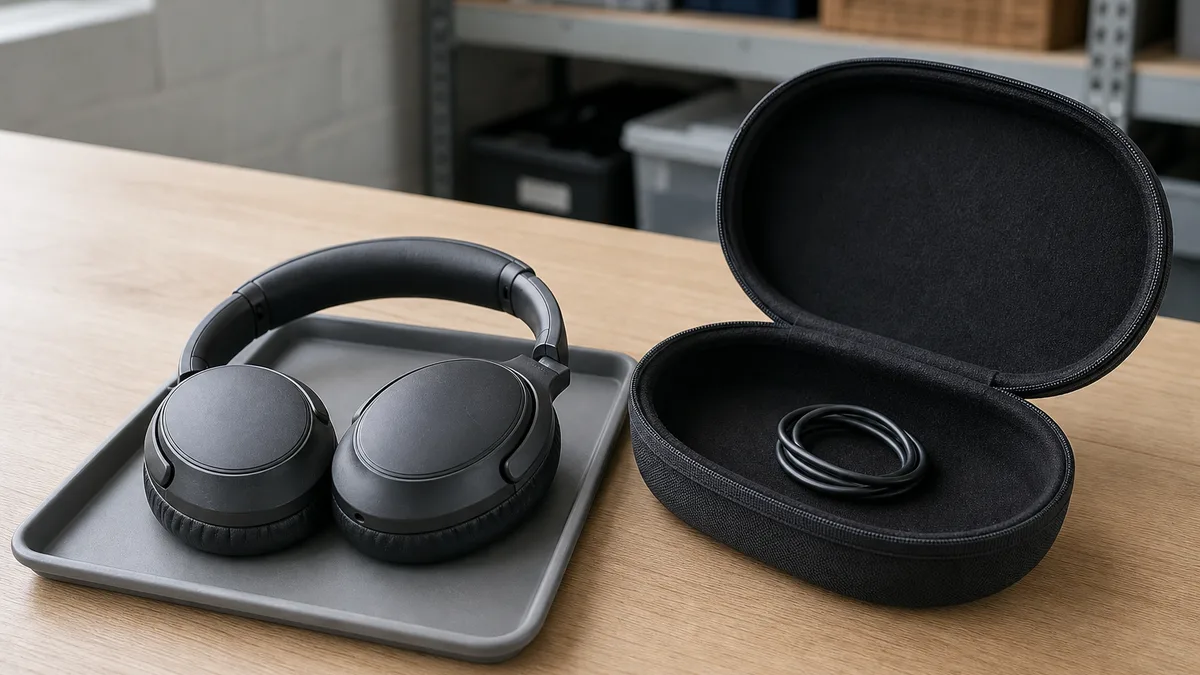
Crezendo receives inquiries about laptops, desktop computers, phones, tablets, consoles, monitors, peripherals, components, and networking equipment. Possible use depends on more than age: safety, condition, accessories, parts availability, and the educational or technical purpose all matter.
Before transporting a large batch, prepare a list and ask first. The guide to donating company technology in Panama helps organize a corporate handoff without turning it into a transfer of waste.
How equipment can support education, digital inclusion, and employability
The most defensible impact connects equipment to an observable activity. Examples include:
- a computer used to practice productivity tools;
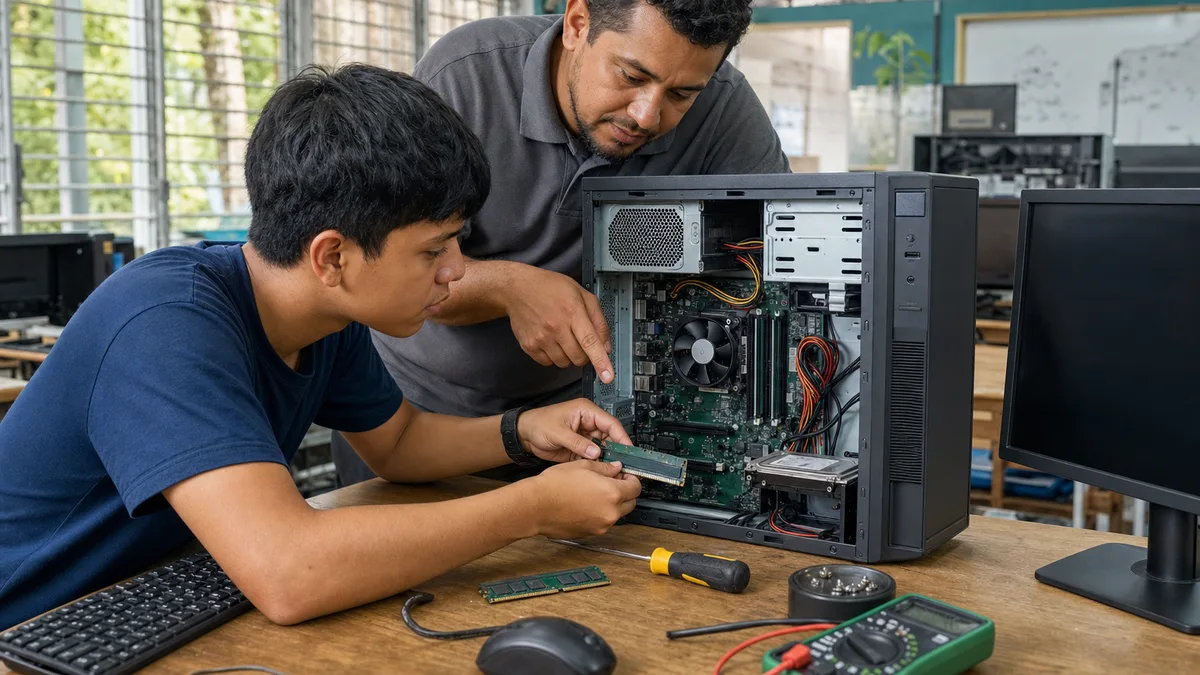
- components used to learn diagnostics and repair;
- networking equipment used in an isolated training lab;
- a tablet used for learning materials it can actually run;
- peripherals that complete an existing workstation.
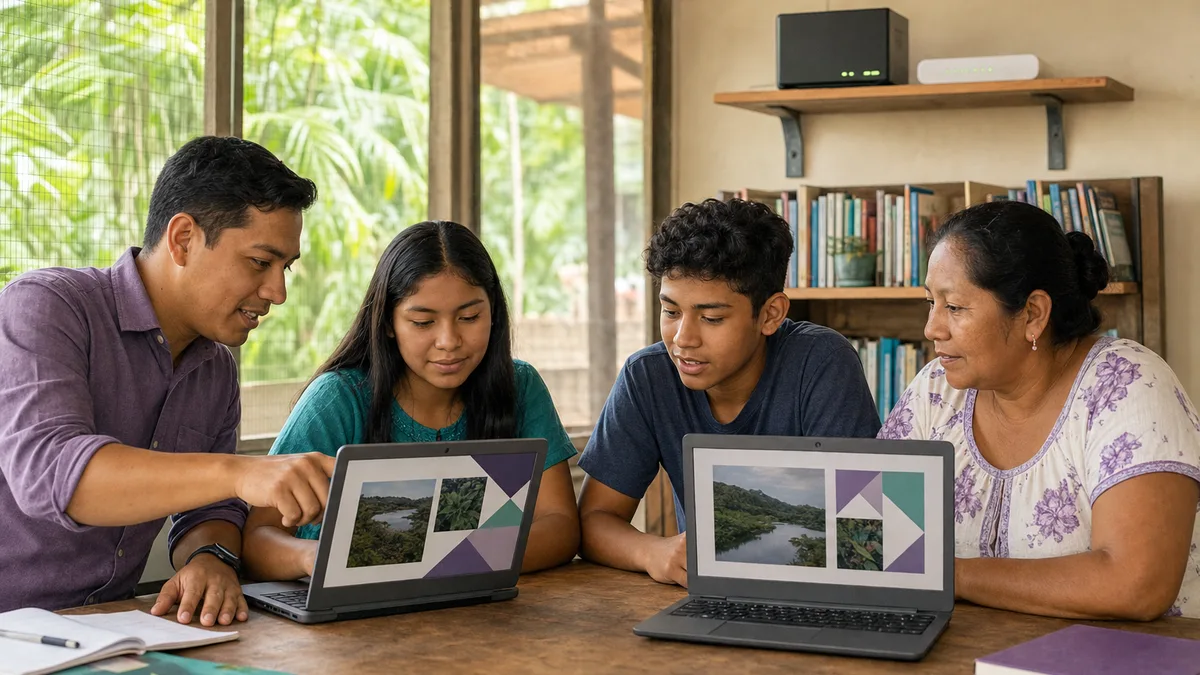
Used technology can support education in Panama, but it must fit local conditions: electricity, connectivity, physical security, maintenance, and people who can support its use. Delivering the wrong model or a device without its charger can create extra work rather than opportunity.
How to avoid data risks and obsolete-equipment burdens
The donor retains an important responsibility before handoff. Do not share personal passwords, and do not assume that emptying the recycle bin erases information. On phones and tablets, unlink accounts and activation locks. On computers and storage devices, choose a method suited to the media and the sensitivity of the data. A company should apply its security policy and retain evidence of the process where appropriate.
Disclose dangerous damage as well. The EPA recommends removing batteries when possible and managing them separately; do not power or charge a swollen battery. Secure loose parts and label chargers. If the hardware contains files you still need, complete backup or recovery first; donation is not a substitute for that process.
How to measure impact without inventing outcomes
Measurement does not require a dramatic number. It requires evidence proportional to the donation.
| Stage | Useful evidence |
|---|---|
| Before handoff | Inventory, declared condition, and possible purpose |
| Upon receipt | Confirmation and list of items received |
| After assessment | Quantity reusable, repairable, useful for practice, or unusable |
| If follow-up exists | Assigned use, availability, and maintenance notes |
A company can incorporate this evidence into a technology-donation CSR strategy without attributing unobserved social outcomes to the equipment. Tax benefits should not be presented as automatic either; tax treatment depends on documentation and professional review for the specific case.
How to start a donation with Crezendo
- Make a short list of the equipment and accessories.
- Describe known faults and physical risks.
- Protect your data and remove account locks where applicable.
- Visit Crezendo's donation page to ask about assessment and coordination before transporting the equipment.
- For a company donation, agree in advance on the inventory, responsible contacts, and required evidence.
You do not have to guess whether every item will be reusable. The important part is to disclose its condition and allow an assessment before deciding its destination.
When recycling should be the last alternative
The ITU recommends prioritizing prevention, reuse, and repair before recycling. That does not mean keeping unsafe equipment forever. If an assessed item has no reasonable use, cannot be repaired safely, or has reached the end of its useful life, it needs responsible e-waste management.
Assess first, then decide. This keeps donation from becoming disguised disposal and reserves recycling for equipment that truly cannot be used any longer.
Frequently asked questions
What impact can a used computer or tablet create?
It may enable a specific learning, practice, or access activity when it is fit for that purpose and the setting supports its use. The outcome should not be assumed or quantified before the actual use is known.
Can I donate equipment if I do not know whether it works?
You can ask about it while clearly stating that its condition is unknown. An assessment can determine whether it is reusable, repairable, useful for practice, or needs another form of handling.
Does Crezendo automatically accept every device?
The donation page lists several categories of technology, but possible use depends on an assessment. Ask first, especially for a batch, incomplete equipment, or a physically damaged device.
How should I protect my data before donating?
Back up needed files, sign out, unlink accounts, and apply an erasure method suited to the device and the sensitivity of the information. For business or sensitive data, follow your organization's policy and technical guidance such as NIST SP 800-88 Rev. 2.
Where do I start a donation in Panama?
Start on Crezendo's donation page. Describe the equipment and its condition before coordinating the handoff.