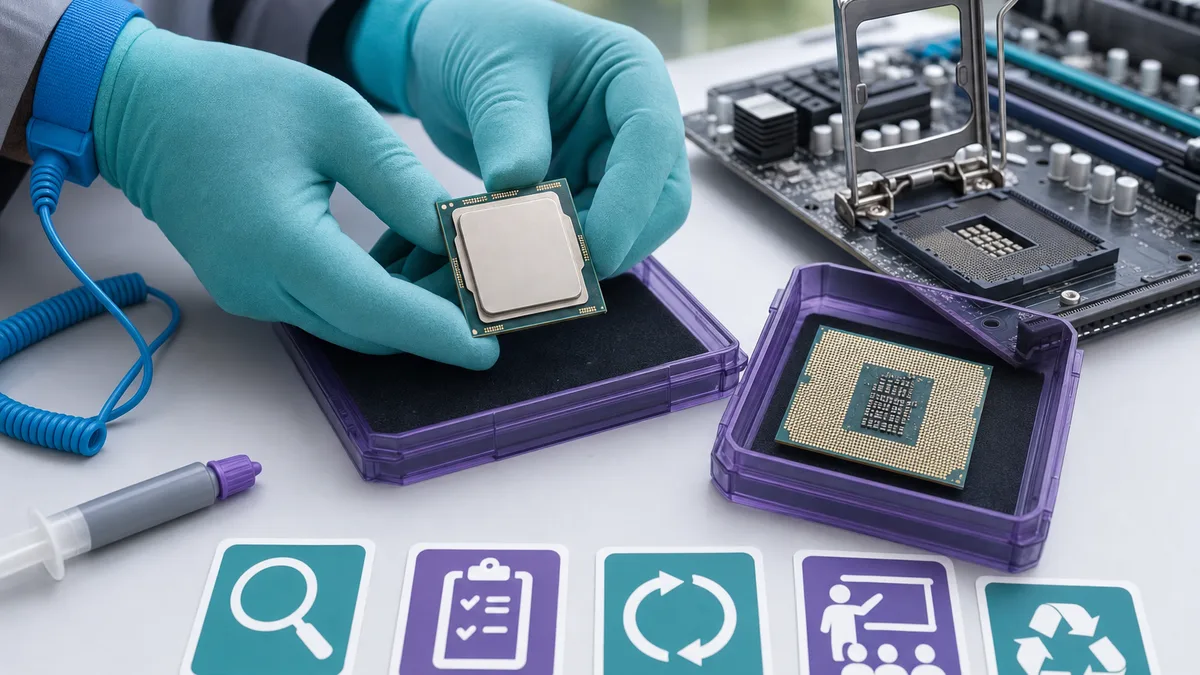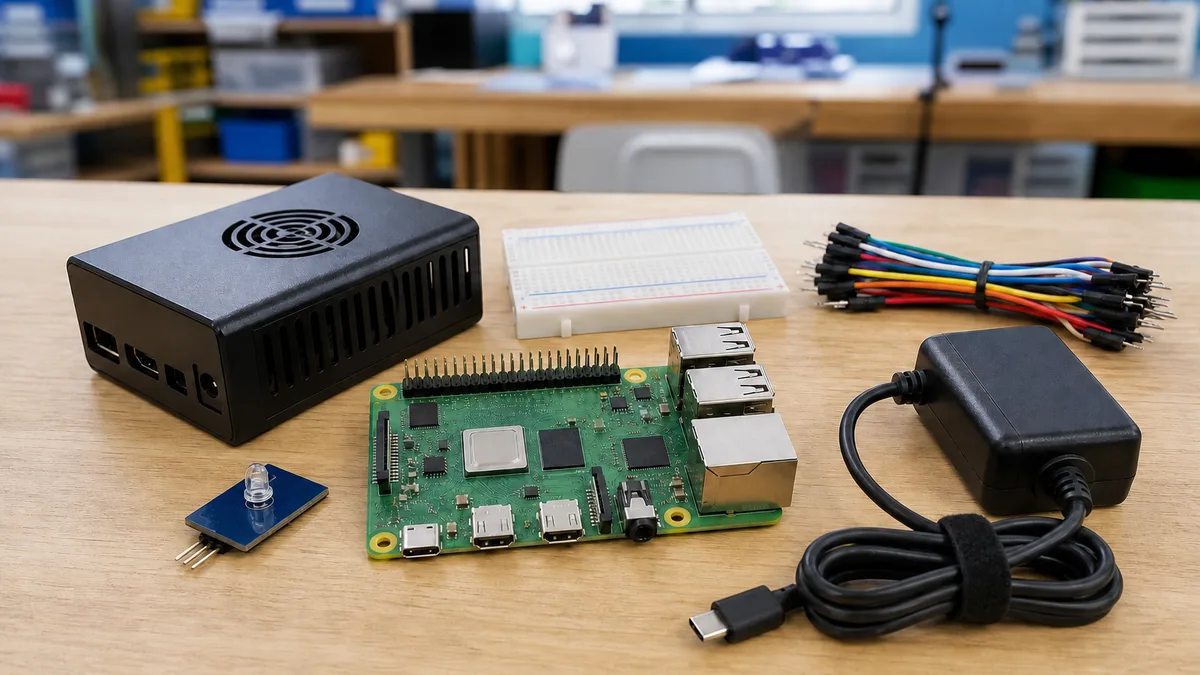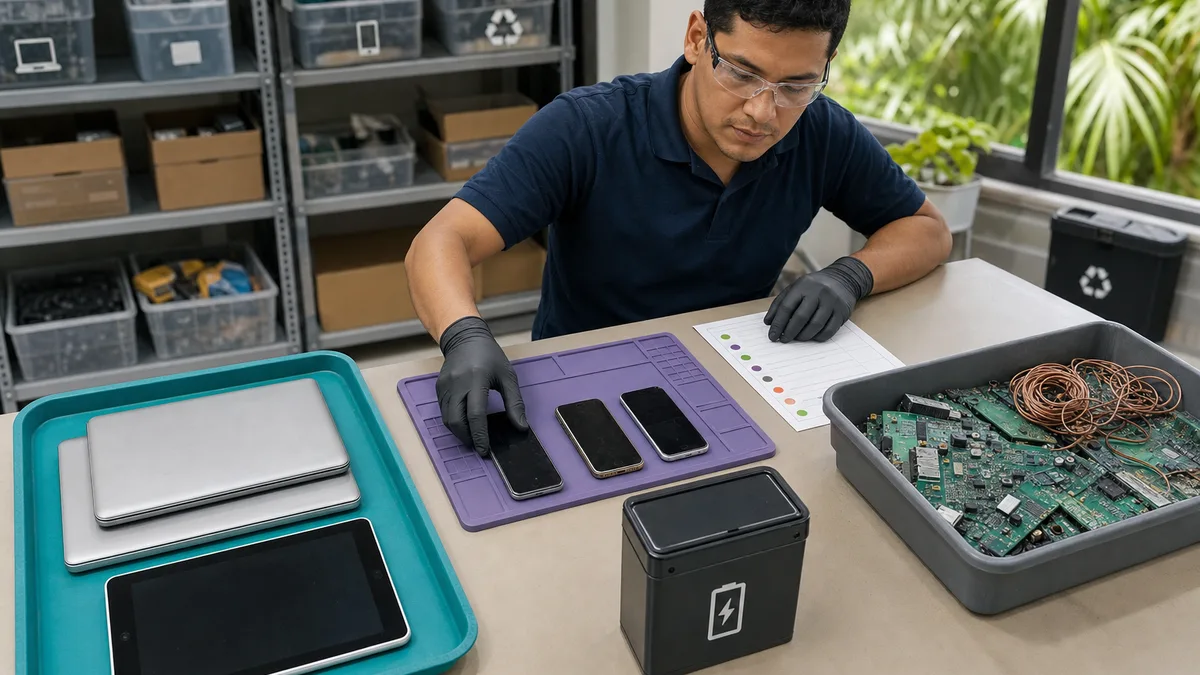
Electronic waste is not simply “trash with cables.” A phone, laptop, battery, monitor, or circuit board combines metals, plastics, glass, and components that may retain value for reuse or require specialized handling at the end of their useful life.
In Panama, the responsible decision should not begin with “where do I throw it away?” but with “can it still be reused, repaired, or put to another use before it becomes waste?” The answer depends on the device's condition, batteries, stored data, and the management route that is actually available.
What environmental impact can discarded electronics have?
Manufacturing electronics requires raw materials, energy, transportation, and industrial processes. When a functional device is replaced prematurely, those embedded resources stop being used sooner than necessary. Reuse and life extension may therefore be preferable to recycling when the equipment remains safe and useful.
At end of life, some components require special care. Common examples include:
- lithium-ion batteries in phones, tablets, and laptops;
- older batteries using other chemistries;
- circuit boards and connectors containing various metals;
- displays and historical equipment that may contain materials different from current designs;
- plastics with additives and flame retardants;
- lamps or components in certain older products that require a specific route.
It is not accurate to claim that every device contains exactly the same materials or that every discarded electronic product releases contaminants in the same way. Risk depends on design, condition, storage, breakage, and downstream treatment.
The special issue of lithium batteries
Lithium-ion batteries can cause fires when damaged, punctured, crushed, or placed in unsuitable waste streams. The EPA recommends directing batteries and devices containing them through appropriate electronics or hazardous-waste routes rather than placing them indiscriminately in household trash or municipal recycling.
If a battery is swollen, hot, punctured, deformed, or has an unusual odor:
- do not compress or bend it;
- do not open it;
- do not leave it in direct sun or a hot vehicle;
- avoid transporting it without understanding the safety requirements;
- contact a competent local management route.
Do not bring a damaged battery to Crezendo assuming it will be accepted. Ask first and clearly describe its condition; Crezendo's donation page requires explicit confirmation before transporting any equipment.
What we know about the Panamanian context
Panama enacted Law 502 in 2025, establishing the circular economy as an environmental-management strategy. In March 2026, MiAmbiente reported that interinstitutional work was underway to develop its regulation.
That should not be confused with one single rule that automatically resolves every e-waste case. Depending on the equipment, generator, and treatment, different rules, authorities, and operators may be relevant. This article therefore avoids publishing a precise national electronics-recycling rate or a universal nationwide disposal route when no sufficiently specific and current official source demonstrates it.
Reuse, repair, donate, or recycle: how to decide
1. Reuse when the equipment still serves a purpose
A monitor, computer, phone, or peripheral that still works may have a second period of use. Before buying a replacement, consider whether an upgrade, cleaning, storage or memory change, battery service, or software change can extend its life reasonably.
The EPA recommends considering upgrades and reuse before replacing equipment that can still serve a purpose. Extending useful life delays entry into the waste stream and uses the resources already embedded in manufacturing for longer.
2. Repair when value and risk justify it
Not every device should be repaired. Consider:
- part cost and availability;
- safety of the damaged component;
- energy use and compatibility;
- expected reliability after repair;
- availability of manuals and tools;
- data or accounts that must be protected;
- actual usefulness after repair.
A repair that costs more than a reasonable alternative or retains a safety concern may not be the best choice.
3. Donate only when a recipient confirms acceptance
Crezendo publicly lists categories it may evaluate: laptops, tablets, desktop computers, phones, consoles, monitors, cables, accessories, components, and peripherals. The list does not mean automatic acceptance.
The correct process is:
- send an inventory with model, quantity, accessories, and condition;
- include photos when there is damage;
- disclose account locks or stored-data concerns;
- wait for assessment;
- confirm in writing what is accepted and how it will be handed over;
- transport or ship only after that confirmation.
Crezendo does not promise that every device will be repaired, used in training, given to a specific person, or later recycled through a predetermined route.
4. Use recycling or specialized management when reasonable reuse is over
When equipment is no longer safe or useful, specialized recycling may recover materials and manage fractions that should not be mixed with ordinary waste. For electronics containing batteries, older displays, or other delicate components, confirm what the operator accepts and how the item must be prepared.
The EPA recognizes certification standards such as R2 and e-Stewards in the United States. That is useful for understanding what an auditable downstream chain can look like, but it does not mean every operator in Panama uses those standards or that Crezendo is a certified recycler.
Before handing over a device: protect your data
Environmental management and privacy are connected. A computer, tablet, phone, console, or smart device may retain accounts and files long after you stop using it.
Before donating or recycling:
- back up what you want to keep;
- unlink accounts when applicable;
- remove SIM cards, memory cards, and accessories not included in the handoff;
- use an erasure procedure appropriate to the device and risk;
- document exceptions when the device will not boot or cannot be wiped.
Crezendo's donation page states that the donor remains responsible for backups, account removal, and appropriate erasure unless a written exception defines another process. Do not assume that handing over a device automatically produces a data-sanitization certificate.
How to reduce electronic waste now
You do not need to wait until a device fails. You can reduce impact through purchasing and use decisions:
- choose repairable products when practical;
- avoid replacement for minor changes;
- protect batteries from heat and physical damage;
- keep compatible chargers and accessories;
- document models and parts in organizations with large inventories;
- reassign equipment internally before buying another unit;
- separate devices containing damaged batteries;
- plan end-of-life handling before years of equipment accumulate in storage.
What Crezendo may do—and what should not be assumed
Crezendo may evaluate inquiries about several types of used electronics. Its public process is based on inventory, assessment, data protection, and confirmed handoff.
Do not assume that Crezendo:
- accepts every electronic device;
- automatically receives damaged batteries;
- is a certified e-waste manager;
- guarantees repair or reuse;
- issues a data-destruction certificate by default;
- can confirm a final destination before evaluating the item.
If you have equipment that may still be useful, start with Crezendo's donation page and wait for confirmation before moving it.
Sources consulted
- MiAmbiente: work to regulate Law 502 on the circular economy.
- EPA: Electronics Donation and Recycling.
- EPA: why used lithium-ion batteries should go to appropriate facilities.
- EPA: Certified Electronics Recyclers.
Frequently asked questions
Should every electronic device be recycled immediately?
No. When it remains safe and useful, reuse or repair may extend its life. Recycling becomes important when reasonable or safe reuse has ended.
Can I place a lithium battery in household trash?
That is not a good practice. These batteries need an appropriate management route because of fire and damage risks during collection and processing.
Does Crezendo accept every damaged device?
No. You may ask about working, damaged, incomplete, or unknown-condition equipment, but acceptance is assessed case by case.
Does donation guarantee that the device will go to a student?
No. Assessment may show that the item does not fit, requires another route, or only some parts remain useful. A recipient should not be promised before evaluation.
The most useful environmental decision is one that avoids an improvised exit
First determine whether the equipment can remain in use. If not, choose among repair, confirmed donation, or specialized management. Separating those decisions is more responsible than storing the device indefinitely or sending it into a route you never verified.