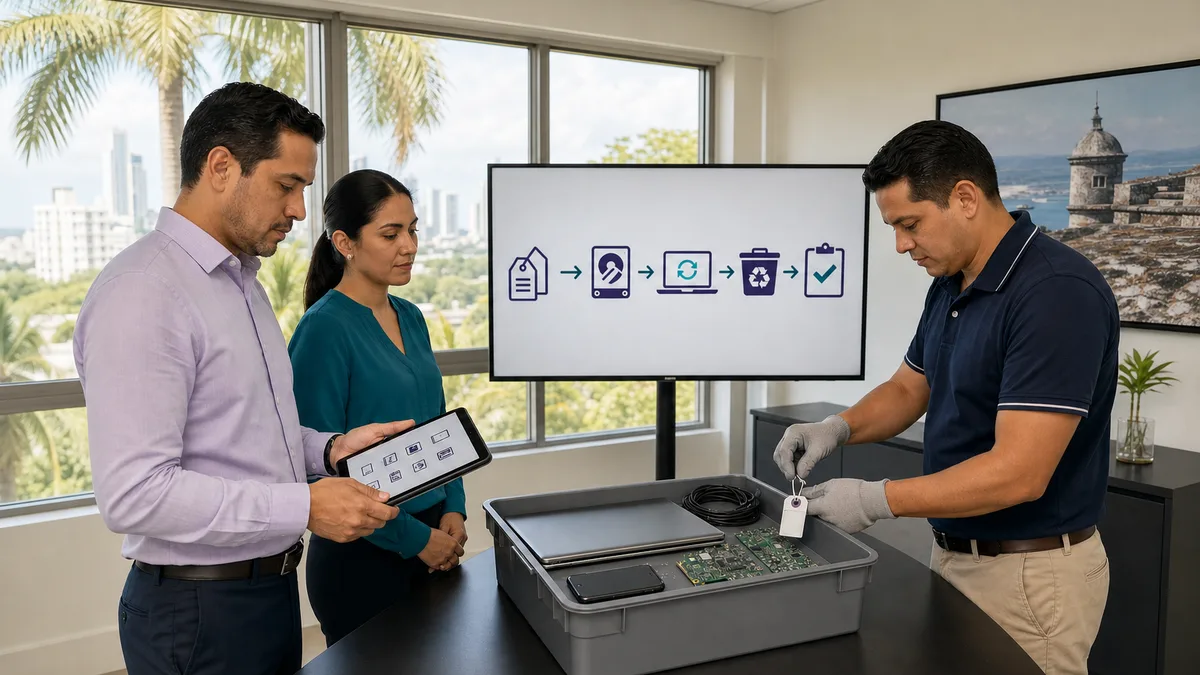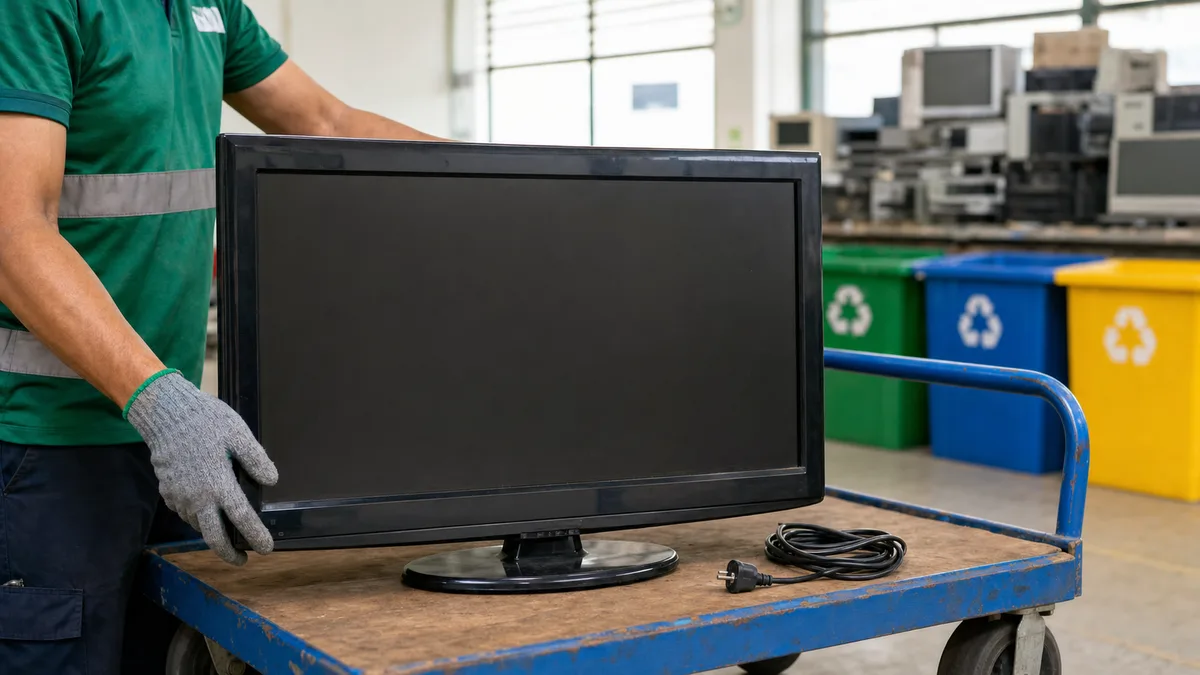
When a television is no longer used, the right decision is not always to “recycle it” immediately. First determine whether it still works, can reasonably be repaired, has value for reuse or donation, or must be handled as electronic waste because of its condition.
In Panama, a television should not be taken without notice to a nonprofit, workshop, or drop-off point. Size, weight, display technology, and damage all affect the decision. Crezendo can receive a donation inquiry, but an inquiry is not an acceptance and does not make the organization an electronics recycler or waste manager.
First identify the type of television
CRT or tube television
CRT sets have a deep cabinet, are much heavier than flat panels, and contain a vacuum glass tube. The U.S. Environmental Protection Agency explains that CRT funnel glass contains lead and that, when reuse or repair is not practical, the unit should follow an appropriate recycling route.
Do not open, strike, puncture, or attempt to dismantle a CRT. Even after years without power, it should not be treated as an empty box or as material for improvised home practice.
LCD, LED, or another flat panel
A flat panel may be lighter than a CRT, but it still combines glass, plastics, circuit boards, power components, and other materials. Some LCD designs, particularly older models with certain backlight technologies, may contain mercury; it is not accurate to assume that every LCD contains it or that none do.
When the screen is cracked, the cabinet is deformed, or there is a burnt smell, liquid damage, severe corrosion, or loose parts, avoid powering the set and describe the damage before moving it.
Smart TV
In addition to physical condition, a Smart TV may retain signed-in accounts, app history, Wi‑Fi network names, preferences, and links to assistants or online services. Before transfer, it should also be treated as a device that may contain personal information.
When reuse, repair, or donation deserves consideration
A television may be worth evaluating when it:
- powers on and displays a stable image;
- retains its main inputs;
- has no broken glass, burnt odor, abnormal heating, or visible electrical damage;
- has a localized fault that could be diagnosed safely;
- includes its stand, remote, power cable, or other identified accessories;
- may have educational, institutional, or technical value.
A missing remote, absent stand, or configuration problem does not automatically turn the television into waste. It also does not guarantee that an organization can accept it. Size, power consumption, age, parts availability, logistics, and current needs all matter.
To propose it to Crezendo, prepare:
- brand and model;
- approximate display type;
- screen size;
- whether it powers on and what problem you observed;
- photos of the front, back, label, and damage;
- included accessories;
- location and delivery or pickup constraints;
- accounts or information that still need to be removed.
Then use the page to ask Crezendo about a technology donation. Wait for explicit confirmation before transporting the television.
When the television should be handled as waste
Specialized management becomes the priority when there is:
- a broken, cracked, or separated CRT tube;
- shattered display glass or exposed sharp edges;
- fire, smoke, flooding, or contamination damage;
- a persistent burnt smell or charred components;
- exposed internal wiring;
- heat deformation;
- no reasonable repair route or rejection after evaluation;
- a business disposal process that requires documented traceability.
In these cases, do not relabel a waste-management need as a “donation” merely to transfer the problem. Ask the competent authority or an authorized manager about the route for that material. Do not mix it with ordinary household waste or abandon it outdoors.
For a broader explanation of reuse, donation, and recycling, read Crezendo's guide to responsible electronics donation and recycling.
How to prepare a Smart TV and protect your information
Before transferring a smart television:
- identify signed-in video, music, gaming, and store accounts;
- sign out or deregister the television from each service when the platform allows it;
- remove profiles and paired Bluetooth devices;
- perform the factory reset described by the manufacturer for the exact model;
- remove USB drives, cards, cameras, adapters, and external devices;
- use another device to check whether the television remains listed as authorized;
- do not share photos that expose email addresses, Wi‑Fi networks, sensitive serial numbers, or account information.
A factory reset is a reasonable step for a working set, but this guide does not promise certified erasure or make data recovery impossible. When the television belongs to a business, held sensitive information, or cannot open its settings menu, consult the responsible technology professional before transfer.
The EPA also recommends deleting personal information before donating or recycling electronic devices.
How to move a television without making the risk worse
- Keep a flat panel upright and do not place weight on the screen.
- Use two people when size or weight requires it.
- Protect corners and surfaces without applying concentrated pressure to the panel.
- Keep the stand, screws, remote, and cable together in a labeled bag.
- Do not lift the set by connectors, cords, or loose parts.
- A CRT can be far heavier than it appears; do not attempt to carry it alone.
- If glass is broken or parts are exposed or contaminated, do not improvise packaging or use public transportation; request instructions for the specific case.
Do not open the cabinet to reduce weight. A damaged display does not become safe merely because parts were removed without suitable knowledge and controls.
What Crezendo can and cannot do
Crezendo can evaluate a donation proposal for a television that appears safe, reusable, or reasonably repairable. The evaluation requires prior information about the model, condition, size, location, and damage.
It does not guarantee:
- acceptance;
- home pickup;
- repair or refurbishment;
- a particular educational use;
- dismantling or component recovery;
- data wiping or a destruction certificate;
- recycling, waste treatment, or an environmental certificate.
Crezendo should not be described as a certified recycler, waste manager, or general e-waste collection service. When a television does not fit its capabilities or presents hazards, an authorized waste-management route is appropriate.
The general framework in Panama
Panama's approach to electronic waste does not rest on a single “television law.” It combines general waste rules, separation and management duties, provisions related to electrical and electronic equipment, and circular-economy principles.
Crezendo's reviewed guide to the Panamanian electronic-waste framework explains the relevant rules and distinguishes reuse, donation, recycling, and final disposal. A business should also document inventory, asset-disposal approval, data protection, transfer responsibility, and evidence from a waste manager when applicable.
This is general information. Large volumes, contaminated equipment, hazardous waste, or a specific regulatory obligation should be confirmed with competent authorities and qualified professionals.
Technical sources consulted
- EPA: Cathode Ray Tubes (CRTs).
- EPA: Electronics Donation and Recycling.
- EPA: Mercury in Consumer Products.
Frequently asked questions
Does Crezendo accept every old television?
No. You can submit an inquiry, but acceptance depends on type, condition, safety, size, logistics, and current needs. Do not transport it before receiving confirmation.
Can I deliver a CRT television without notice?
That is not recommended. A CRT is heavy and contains leaded glass. Report the model, size, condition, and any breakage before moving it. A broken or unsafe CRT will likely need a waste-management route rather than an ordinary donation.
How do I remove my accounts from a Smart TV?
Sign out, deregister the device from services when possible, and perform the manufacturer-specified factory reset. Remove external devices and review authorized-device lists as well.
Can a television with a broken screen be donated?
Do not assume so. Broken glass, sharp edges, and internal damage may make transport or use unsafe. Describe the condition and wait for an assessment; if it is not suitable, ask an authorized manager about disposal.
Are donation and recycling the same thing?
No. Donation aims to preserve use or allow evaluation for repair. Recycling processes materials when there is no reasonable reuse path.
What should I do if Crezendo cannot receive it?
Ask the competent authority for guidance or identify an authorized manager for that material. Verify scope, delivery conditions, and documentation before transporting the television.
Decide before you move it
If the television works or appears repairable and has no visible hazards, gather its details and ask Crezendo for an evaluation. If it is broken, contaminated, or unsafe, prioritize an authorized waste-management route.
Ask whether Crezendo can evaluate the television for donation