If you have a retro console stored in Panama, there is no single correct outcome. It may have collector value, still work, provide useful spare parts, be sellable, or be a candidate for donation. The useful step is to decide with good information before moving it, opening it, or separating accessories that may later be difficult to replace.
Crezendo allows people to ask about consoles, cables, controllers, games, manuals, and related accessories for evaluation. That is not automatic acceptance, guaranteed repair, museum display, or assignment to a specific student. The decision depends on the model, condition, safety, included accessories, logistics, and current needs.
First decide whether you actually want to donate it
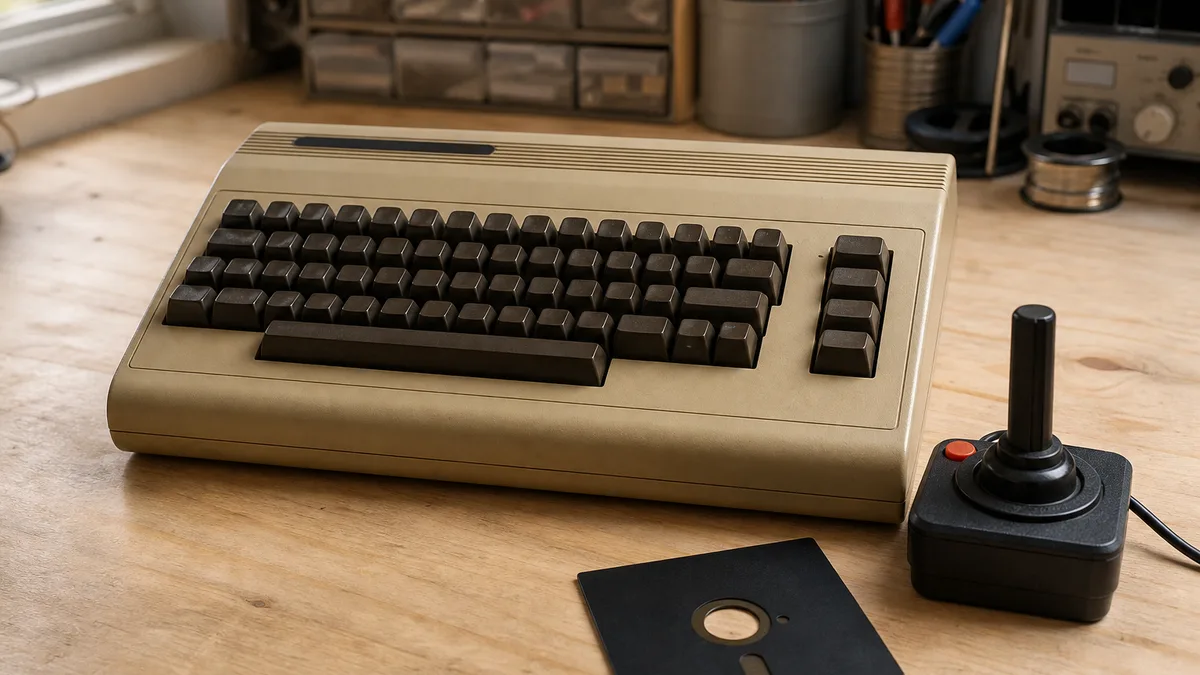
Before planning a handoff, identify what you have and what it is worth to you. An NES, Super Nintendo, Nintendo 64, GameCube, Sega Genesis, Saturn, Dreamcast, original PlayStation, PS2, original Xbox, or an older handheld may matter for very different reasons.
Consider at least four options:
- Keep it if it has sentimental, historical, or collector value to you.
- Sell it if you would rather recover part of its value and there is an interested buyer.
- Donate it if you no longer want it and an organization confirms that it can evaluate or use it.
- Use an appropriate electronics-waste route if it is unsafe or there is no reasonable reuse path.
Donation is not automatically “better” than keeping or selling. A complete collection, uncommon edition, or system with its original box and documents may have historical or commercial value. A responsible decision starts by recognizing that.
Make an inventory before moving anything
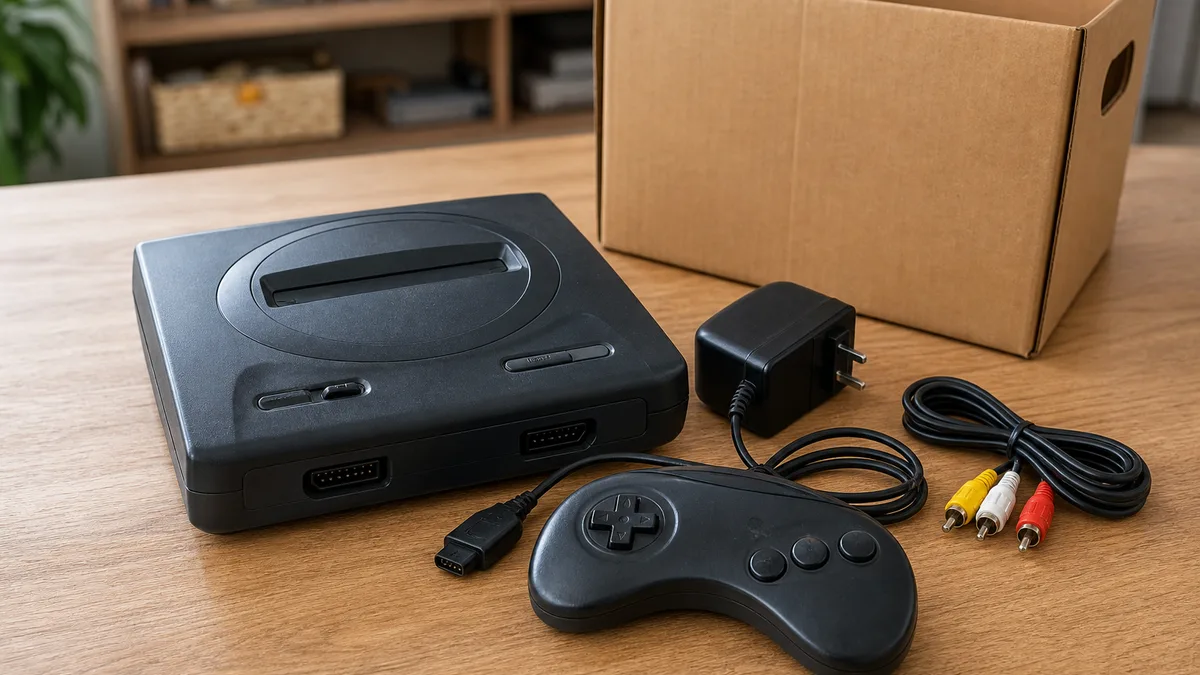
A retro console often depends on accessories that may now be harder to find than the console itself. Before separating pieces, create an inventory and take useful photos.
Include, when relevant:
- console and exact model;
- power supply or power adapter;
- AV, RF, composite, component, or proprietary video cable;
- one or more controllers;
- memory cards or external modules;
- cartridges, discs, or other physical software;
- manuals, maps, leaflets, boxes, and inserts;
- adapters, receivers, multitaps, or special peripherals;
- loose parts you know belong to the system.
If you do not know what a cable or accessory belongs to, do not discard it. Photograph the connectors and labels. That can be enough to identify it without opening the hardware.
Document the actual condition
You do not need to prove that the console works at any cost. Describe what you genuinely know.
Record:
- whether it powers on;
- when it last worked;
- whether it produces video and sound;
- missing covers, screws, or external pieces;
- whether controllers respond;
- cuts, improvised repairs, or loose connectors on cables;
- corrosion, rust, liquid damage, or signs of insects;
- burnt odor, abnormal heat, or deformed plastic;
- battery leakage, swelling, or corrosion in a battery compartment.
If you find electrical damage, liquid, exposed parts, deteriorated batteries, or a damaged power adapter, do not keep powering the system merely to test it. An accurate description and photos are more useful than a risky test.
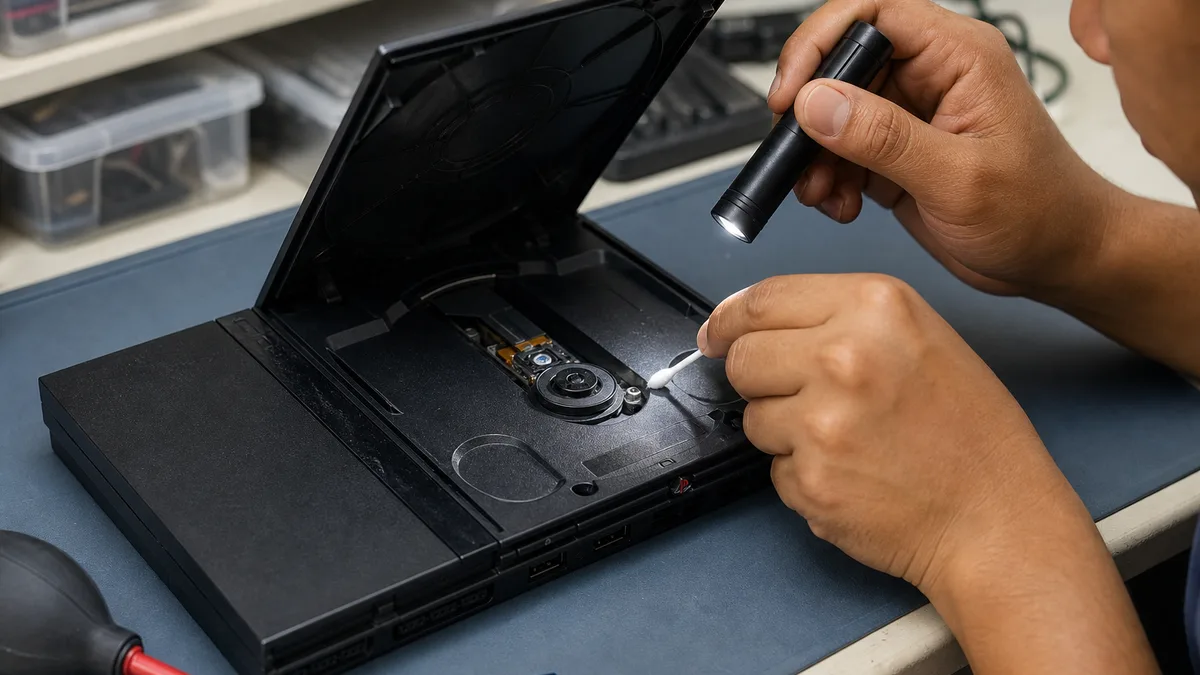
You also do not need to open a console or power supply for an internal cleaning before donation. Without experience, old plastic can crack and boards or electrical parts can be damaged.
Controllers, cables, games, and manuals matter too
Accessories do not necessarily justify a separate page for every item, but they are part of the value of the set.
Controllers
State how many you have, whether they are original or compatible, and any known fault. A controller with worn buttons, a damaged cable, or a faulty stick may still be worth evaluating, but it should not be assumed accepted until Crezendo confirms interest.
Cables and adapters
Group them without winding them excessively tight. Identify the console when you can. Do not cut connectors or improvise plug replacements to make them “universal.”
Before connecting an old power supply or adapter, photograph its label and the console label. Record the brand, model, input, output, AC or DC, voltage, current or power, polarity, and connector type when they are legible. A connector that fits does not prove compatibility: two physically similar supplies can differ in output, polarity, wiring, or the equipment they are designed to power.
If the label is unreadable, you do not know which console it belongs to, or you see a frayed or spliced cable, tape used as a repair, loose pins, an opened or deformed enclosure, moisture, soot, a burnt smell, or a history of abnormal heat, keep it unplugged. Do not open the supply or energize it “just to test it.” You can include an adapter without its console in the same inquiry, label its compatibility as unknown, and provide clear photos; Crezendo will decide whether evaluation makes sense without promising testing, repair, or acceptance.
Games and physical software
Keep cartridges and discs identified and protected. Do not put a deeply cracked or deformed disc into a drive just to test it. If a newer system uses accounts, profiles, or storage, also review the privacy section below.
Manuals, boxes, and documentation
They are not merely packaging waste. With older hardware they may help identify revisions, accessories, and original configuration. Keep paper dry and avoid adhesive tape on printed surfaces or improvised cleaning products.
Privacy and stored data
The oldest consoles may store little or no personal information, while later generations can use memory cards, internal drives, removable storage, profiles, or network settings.
Before transferring a system:
- remove memory cards or storage that you want to keep;
- review profiles, usernames, and accounts when the system supports them;
- deregister online services from the provider account when that is still possible;
- perform a reset only with the documented procedure for the exact model;
- do not assume Crezendo will perform certified data erasure for you.
If the system contains sensitive information and you are unsure how to remove it, mention that before delivery.
What Crezendo can evaluate — and what it does not promise
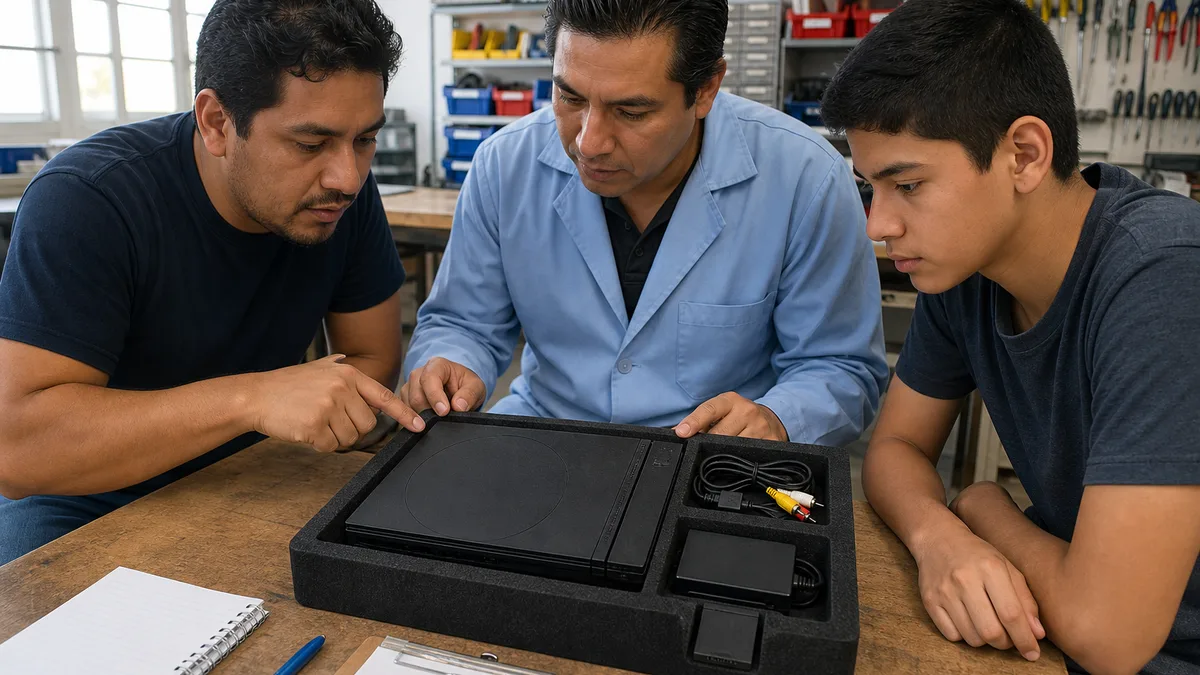
Crezendo publicly states that it evaluates inquiries involving video-game consoles, cables, accessories, and components. You can send photos, the model, condition, included accessories, and location through the donation page.
An evaluation may result in acceptance or rejection. It does not guarantee:
- that every console will be received;
- repair or restoration by Crezendo;
- use in a specific training program;
- delivery to a particular student;
- museum or exhibition use;
- home pickup;
- acceptance of hazardous or contaminated equipment.
This distinction is especially important for retro hardware: a device can be interesting and still not fit the space, parts, logistics, or current needs available at that time.
Ask Crezendo about donating a console or accessories
When recycling makes more sense
Reuse and donation make sense when a system has a reasonable path to use, repair, study, or preservation. Severe damage, contamination, dangerous parts, or lack of any reuse destination may make an appropriate electronics-waste route the better option.
Do not dismantle a damaged console merely to reduce its size. Separate only external accessories that are normally removable and keep components identified.
For a broader explanation of reuse, donation, and recycling, read Crezendo's general guide to electronics in Panama.
Frequently asked questions
Can I ask about a Dreamcast, NES, or old PlayStation?
Yes. You can submit the system for evaluation. The model alone does not guarantee acceptance; describe its condition, accessories, and known damage.
Are cables and controllers useful if I no longer have the console?
They may be, especially when the target system can be identified, but Crezendo confirms acceptance case by case. Send clear photos of connectors and labels.
Can I include games and manuals?
Yes, you can include them in the same inquiry. Keep each game, manual, box, and accessory identified; separate submissions are not necessary.
Does Crezendo accept a console that does not power on?
It can be evaluated, but “does not power on” is not automatic acceptance. Mention liquid exposure, corrosion, odor, heat, power-supply damage, or previous repair attempts.
Should a collectible console be donated or sold?
That depends on your goals. Selling or keeping a console with economic or sentimental value can be completely reasonable. Donation makes sense when you want to transfer it and Crezendo confirms that it can evaluate the system within its current needs.
One inquiry is enough
You do not need to decide whether a Dreamcast, NES, controllers, cables, or manuals belong in separate donation categories. Prepare the inventory, document the condition, and submit one inquiry for the complete set.