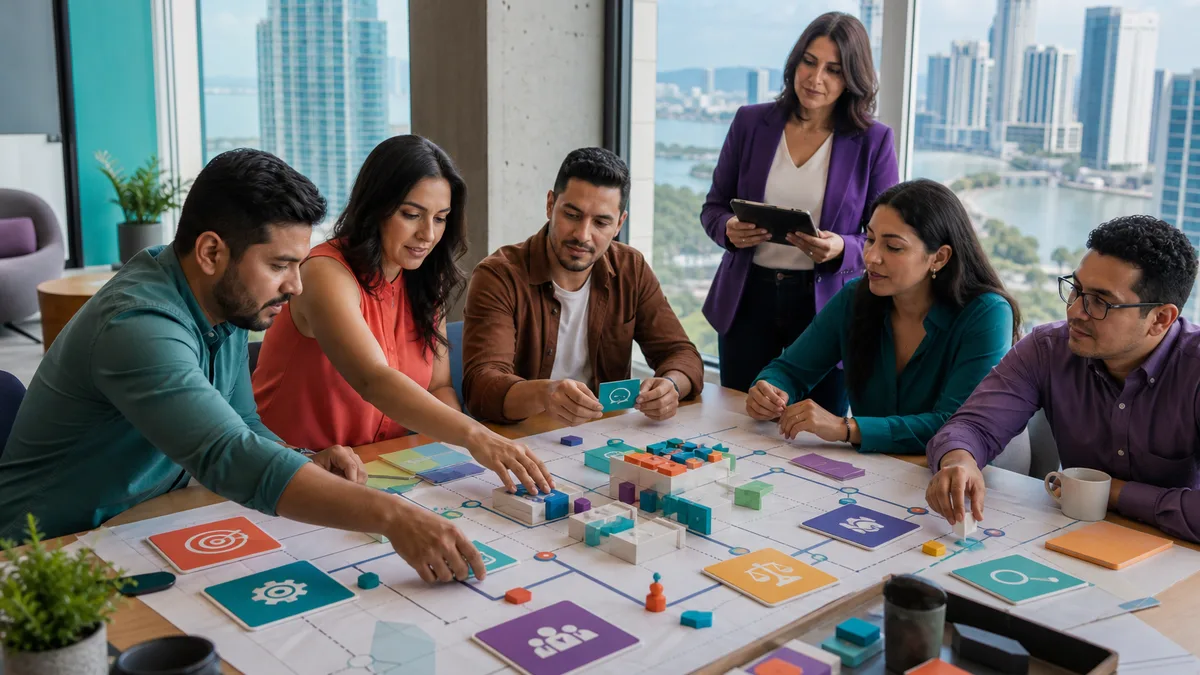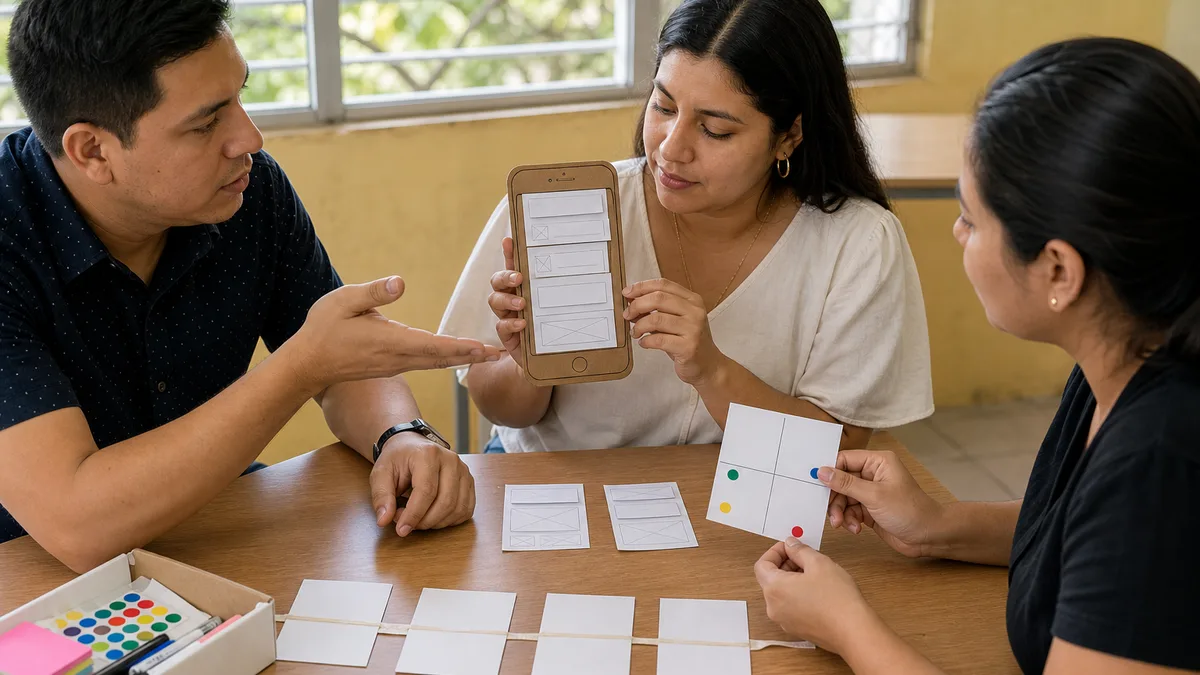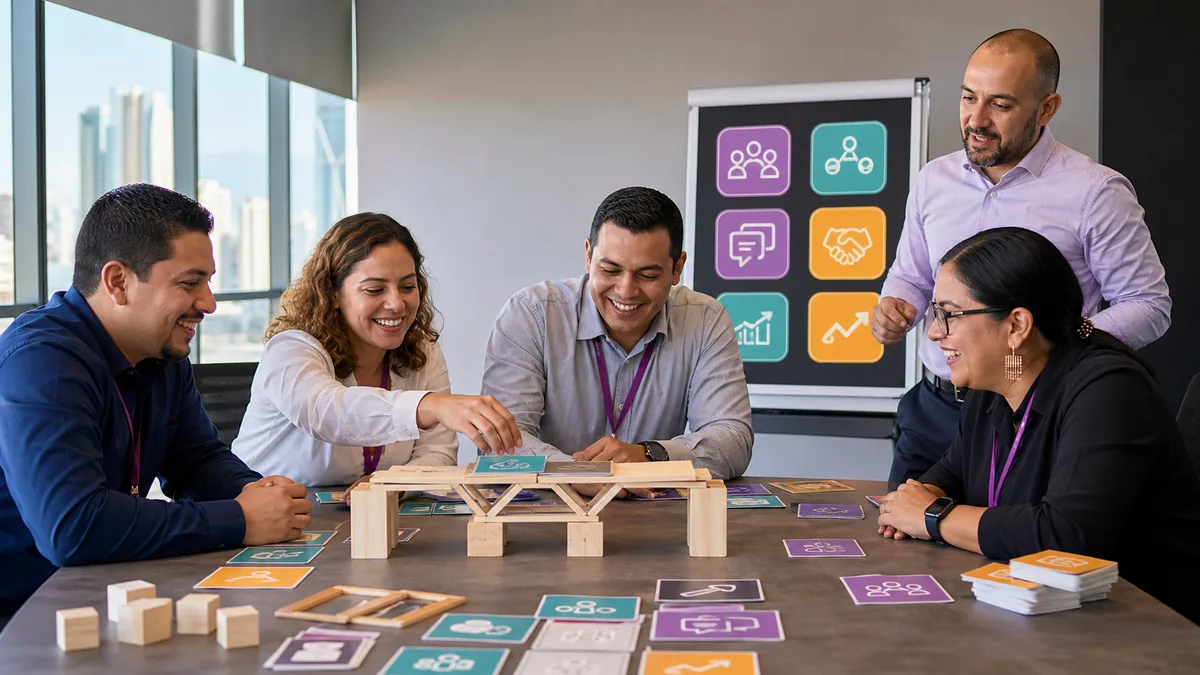
A team can bring together capable people and still coordinate late, misread differences, or depend on the same members every time. Purposeful team building creates an opportunity to observe those dynamics and practice shared capabilities; it does not turn every enjoyable activity into an organizational solution.
This guide helps you choose an objective, distinguish what a workshop can address, and recognize when the problem requires another decision or intervention.
The service page presents the portfolio’s real capabilities, its boundaries, and the information that helps define a proposal.
What does purposeful team building mean?
Value does not depend on whether an activity feels novel or entertaining. It depends on whether the activity allows people to practice a work-related capability and discuss what they observed.
Crezendo’s portfolio includes practical activities and group dynamics for communication, collaboration, recognition of strengths, self-valuation, self-acceptance, thinking styles, resolution, and resilience.
This does not mean that an activity automatically produces productivity, commitment, or a better workplace climate. The workshop creates an opportunity for practice; the company remains responsible for the roles, resources, priorities, and decisions that enable application.
How to choose an objective before choosing an activity
Frame the objective as an observable capability, not a broad promise:
- Describe a recurring situation: what currently makes collaboration difficult.
- Identify who it affects: which working relationships form the group.
- Distinguish skill and system: what can be practiced and what requires a process, role, or decision to change.
- Select a capability: communication, collaboration, strengths, thinking, resolution, or resilience.
- Define what to observe: which conversation, behavior, or response would indicate useful practice.
“Improve the team” is too broad. “Recognize strengths and practice requesting support during a shared obstacle” provides a clearer criterion without promising a guaranteed result.
Real capabilities the workshop can practice
| Portfolio capability | What the group may observe during practice |
|---|---|
| Effective communication | How information and perspectives are shared and understood |
| Collaboration | How contributions are combined and support is requested |
| Strengths, opportunities, and weaknesses | What helps or limits each person and the group |
| Self-valuation | How each participant recognizes the value of their contribution |
| Self-acceptance | How people understand capabilities and limits without displaying a universal strength |
| Thinking styles | How different ways of processing a situation influence the challenge |
| Resolution and confrontation | How differences and obstacles are addressed respectfully |
| Resilience | How the group responds to an error, change, or difficulty |
If the challenge centers on messages, listening, and disagreement, consult the guide to assertive communication at work. If the team needs to practice how to approach disagreement, read the workplace conflict resolution guide and explore the corporate conflict resolution workshop. An active dispute may require a different institutional response.
What information helps define a proposal?
Before requesting a quote, it is useful to share:
- Which departments, responsibilities, or working relationships would form the group.
- Two or three situations where collaboration is currently difficult.
- Which portfolio capability appears related to those situations.
- Which behavior or form of collaboration should become clearer.
- Which process, role, resource, or authority barriers could limit application.
- Which operating conditions must be confirmed.
Crezendo does not publish one universal activity, agenda, delivery mode, duration, participant count, or logistics package for this workshop. The proposal must expressly confirm applicable conditions and any additional element.
Team building, climate, culture, or process change
Not every collective difficulty needs the same approach:
- Team building: enables people to observe and practice collaboration capabilities through activities and group dynamics.
- Workplace climate: examines perceptions and behaviors related to the work environment; review the workplace climate workshop guide.
- Organizational culture: connects sustained habits, values, and incentives; learn how to strengthen organizational culture.
- Process or structure: requires clarity about responsibilities, authority, resources, workload, or priorities; an activity cannot replace that decision.
For broader educational context, read how to improve teamwork in Panamanian companies. You can also view all Crezendo workshops to compare capabilities.
Frequently asked questions
Is team building only recreational?
No. It may use activities and group dynamics, but their purpose is to practice capabilities related to collaboration.
Can it work with a team that already has conflicts?
It can practice communication, resolution, and respectful confrontation, but it does not guarantee resolution of an active dispute. Conflict may require internal decisions or another intervention.
Is it useful for both new and established teams?
It may be evaluated for groups with different challenges, but there is no universal profile. The proposal should identify the group and capability to be practiced.
Does Crezendo publish the activity, delivery mode, duration, and price here?
No. These conditions are not universal and must be expressly confirmed in the proposal.
How do I request a quote?
Share who would participate, which situations recur, which capability you want to practice, and which barriers could limit application. Then review the team-building workshop scope.