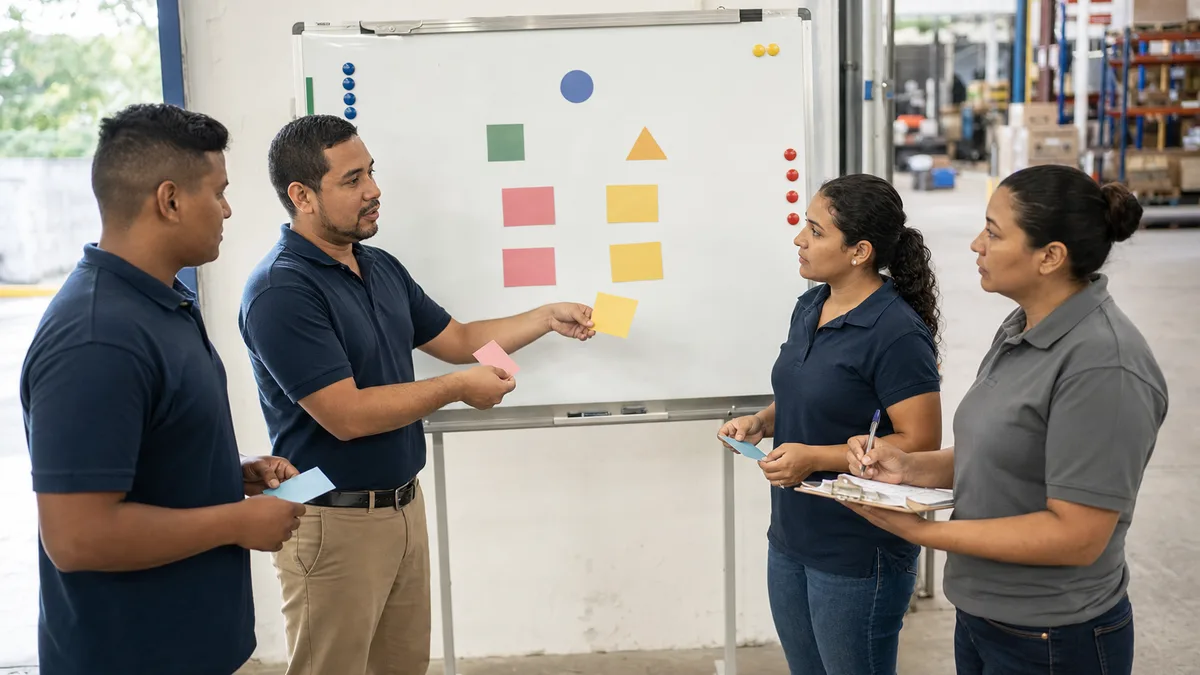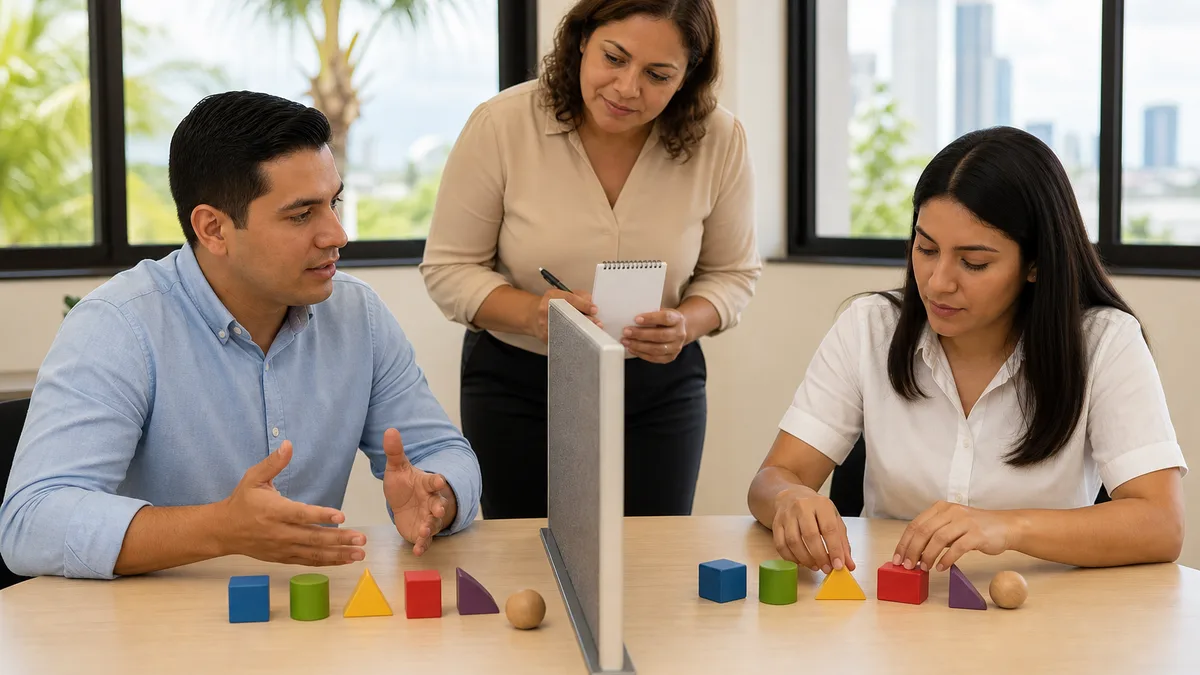
Sharing an office is not synonymous with teamwork. A company can bring together capable people and still have information arrive late, dependencies remain unclear, or cross-department projects stall. Improving collaboration requires observing concrete situations and distinguishing between a capability that can be practiced and a barrier involving process, roles, resources, or authority.
Why teamwork can fail in practice
Some common obstacles are structural or coordination problems rather than personal shortcomings:
- Misaligned objectives: two departments may optimize different legitimate outcomes and create friction between priorities.
- Lack of role clarity: an ambiguous responsibility can lead to duplicated, omitted, or late-discussed work.
- Fragmented information: decisions and data spread across email, personal spreadsheets, and different tools make coordination harder.
- Dependence on key people: the team may become accustomed to relying on the same people to unblock work.
- Unclear communication norms: differences in experience, style, or perspective can be misread when the team lacks explicit coordination agreements.
Five practices you can test to improve coordination
1. Shared objectives with visible metrics
When departments depend on one another, it helps to make the common objective, relevant progress, and dependencies visible. A simple physical or digital board can be useful when the team actually maintains it and uses it to make decisions; a more complex tool cannot compensate for a process nobody follows.
2. Brief synchronization meetings
A short synchronization can focus on three questions: what changed, what comes next, and which blocker needs help? The format and frequency should fit the work. The meeting stops being useful when it becomes another ritual without decisions, owners, or next steps.
3. Interdepartmental collaboration agreements
When two departments depend on each other, they can make explicit what each side delivers, in what format, by when, and how a blocker is handled. The objective is not to add bureaucracy, but to reduce assumptions and make dependencies visible.
4. Brief exposure to another department's work
Observing how a team you depend on works can provide context about its constraints, information, and decisions. Nobody needs to become an expert in another function; the experience is useful when it leads to better questions and agreements.
5. Recognition of collective achievements
When an outcome requires contributions from several people or departments, recognition can also make those contributions visible. This does not replace incentives, roles, or performance evaluation; it simply avoids describing as individual a result that depended on coordination.
Evaluating teamwork in your company
Use these questions to collect examples, not to issue a diagnosis:
| Question | Yes | No |
|---|---|---|
| Do people ask for help before a blocker becomes critical? | ||
| Do disagreements end with a clear next step? | ||
| Does critical information reach the people who need it in time? | ||
| Do cross-department projects have visible owners and dependencies? | ||
| Do meetings end with agreements that participants understand? |
Negative answers do not form a diagnosis on their own. Look for concrete cases and decide whether the obstacle is a behavior that can be practiced or a problem involving roles, process, workload, resources, incentives, or decisions that the organization itself must correct.
Each company's context matters
Every Panamanian company combines sectors, functions, generations, experiences, and working styles differently. Instead of assuming one uniform culture, any intervention should be designed around observable situations, processes, and relationships within the specific team.
If you want to define an objective before choosing an activity, read the guide to choosing team-building objectives. If your company is already evaluating an intervention, explore the team-building workshop for companies in Panama: Crezendo defines the applicable capabilities, conditions, and type of practice in the proposal. You can also contact Crezendo to request a proposal and quote.