The Internet of Things (IoT) connects physical devices with software so they can measure conditions, send data, receive instructions, or automate a response. An IoT project can be as small as a humidity sensor that triggers an alert or as complex as hundreds of distributed devices.
This URL has its own search signal. During the reviewed 90-day window it received 24 impressions, all related to “internet de las cosas en panama”, and reached roughly positions 9–13. The topic deserves a dedicated page, but the previous version was too short and described Crezendo workshops as if they were a confirmed permanent offering.
The four layers of an IoT project
To understand IoT without getting lost in brands and protocols, separate the system into four layers.
1. Device
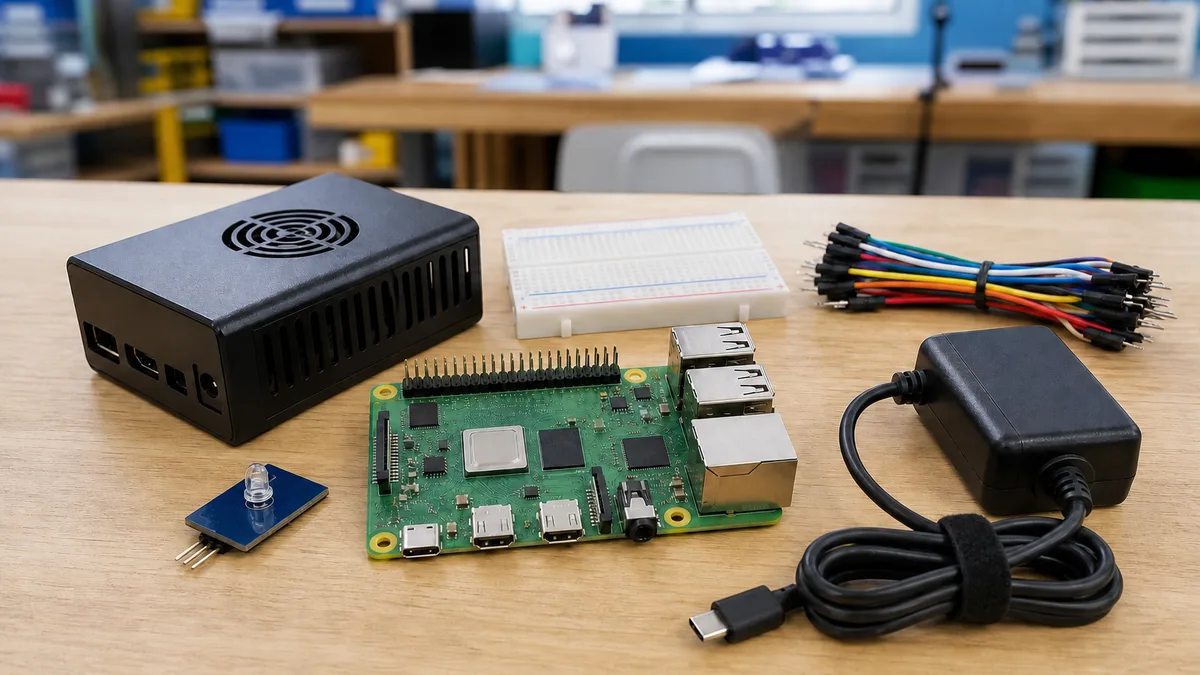
This is the physical component that interacts with the environment. It may include:
- temperature, humidity, light, motion, or distance sensors;
- meters;
- microcontrollers;
- relays;
- motors;
- valves;
- lights or other actuators.
The device needs power, a suitable enclosure, and operating conditions compatible with the place where it will be installed.
2. Connectivity
The device has to move information to another part of the system. Depending on the case, it may use a local network, Wi‑Fi, Ethernet, Bluetooth, cellular networks, or other media.
Do not choose connectivity by fashion. Ask:
- How far must it reach?
- Is permanent power available?
- How much data is sent?
- What latency is acceptable?
- What happens when the connection is lost?
- Will the device live inside or outside a managed network?
3. Data and processing
Data may be processed locally, at a gateway, on a server, or through external services.
This layer decides:
- what is stored;
- how long it is retained;
- what is discarded;
- which event triggers an alert;
- which calculations can happen near the device;
- which information must reach a central application.
Collecting data “just in case” can increase cost, complexity, and risk without improving the decision.
4. Application or action
Data creates value only when someone or something can use it.
The output may be:
- a dashboard;
- an alert;
- a report;
- a command sent to another device;
- a maintenance task;
- a human decision.
A polished chart that nobody reviews does not automatically turn a sensor into a useful solution.
Monitoring, alerting, and automating are different things
Monitoring
Observes a variable, such as recording temperature every five minutes.
Alerting
Adds a rule: if temperature remains above a threshold for a certain period, notify someone.
Automating
The system acts, for example by starting ventilation or stopping a process.
Each level increases the need to manage failures. A wrong reading on a dashboard may be annoying; a wrong reading that activates machinery may have larger consequences.
An IoT project starts with the decision
Before buying sensors, complete this sentence:
We need to know ______ so we can decide or execute ______.
Then define a success measure. Examples include:
- detecting a leak before it creates a defined level of damage;
- knowing whether equipment stays inside an operating range;
- reducing manual inspections that provide little value;
- recording conditions to investigate a failure;
- controlling an educational prototype reproducibly.
If you do not know which decision will change because of the data, you may not need automated collection yet.
A sensor reading is not “reality”
Sensors have range, accuracy, resolution, drift, and installation constraints.
During a practical exercise, ask:
- Which unit does it measure?
- What range does it support?
- What happens outside that range?
- How is an impossible value detected?
- Does it need calibration?
- Does placement distort the reading?
- What happens when it disconnects?
A temperature sensor next to a heat source may be functioning correctly while still representing the wrong condition for the problem you intended to measure.
Edge, gateway, and cloud
Not every reading needs to travel to the internet immediately.
Local or edge processing
Can filter readings, provide low-latency responses, or preserve a basic function while an external connection is unavailable.
Gateway
Can aggregate several devices, translate protocols, or apply rules before forwarding information elsewhere.
Central service or cloud
Can store history, generate reports, manage devices, or combine information from several locations.
The right architecture depends on the case. A two-sensor experiment does not need the same infrastructure as a distributed deployment.
Design what happens when something fails
A real project needs answers for uncomfortable scenarios:
- the sensor stops reporting;
- the battery runs out;
- Wi‑Fi credentials change;
- the server stops responding;
- duplicate data arrives;
- the device clock is wrong;
- the microcontroller restarts;
- a reading is outside the expected range;
- the actuator fails to execute a command.
Use explicit states such as “no data,” “stale data,” or “device offline” instead of showing the last value as if it were still current.
Security: a connected device is also a computer
A connected device may contain credentials, software, administration interfaces, and network access.
At minimum, an IoT project should consider:
- unique and protected credentials;
- software updates;
- only the network services that are actually required;
- segmentation where appropriate;
- encrypted communications when feasible and relevant;
- authentication for whoever sends commands;
- a device inventory;
- a procedure for retiring or replacing equipment;
- enough logging to investigate failures.
Do not expose an administration panel directly to the internet simply because that is convenient during a demonstration.
Privacy: measure what is necessary
An environmental sensor and a camera do not have the same impact.
Before capturing images, audio, location, identifiers, or information that can be associated with a person, define:
- why it is necessary;
- who can view it;
- where it is stored;
- how long it is retained;
- how it is deleted;
- what happens if the device is lost or compromised.
If a variable is unnecessary for the objective, not collecting it may be the simplest and safest decision.
A beginner IoT lab
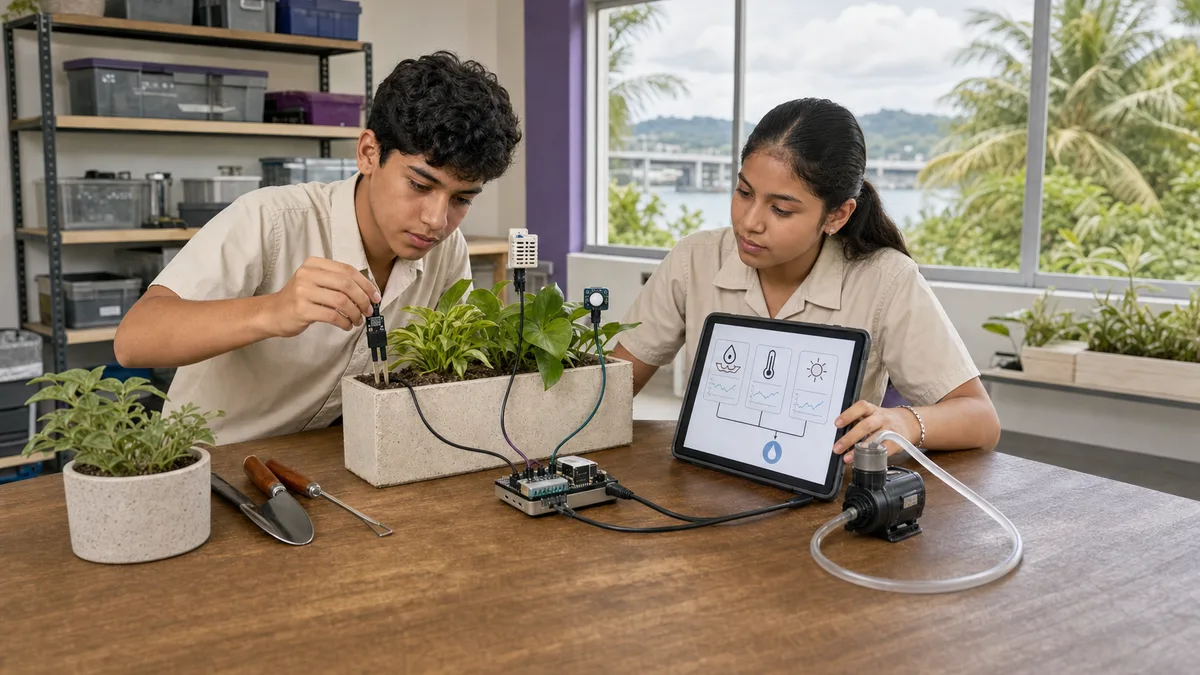
A complete exercise can use a temperature or humidity sensor, a microcontroller, and a simple output.
Step 1: local reading
Read the sensor and print the value locally.
Step 2: validation
Define plausible values and what will happen when the reading fails.
Step 3: logging
Store timestamp and value in a structured form.
Step 4: alert
Add one simple condition and record when it triggers.
Step 5: disconnection
Simulate a network or sensor failure and verify that the system distinguishes failure from a normal condition.
Step 6: documentation
Draw the complete path: sensor → device → network → storage → rule → user or actuator.
That exercise teaches architecture and failure handling, not merely how to copy a code example.
How to evaluate an IoT project for a company
Before approving an implementation, ask:
- What problem does it solve?
- What does each device cost to install and maintain?
- Who replaces batteries or repairs sensors?
- What is the expected hardware life?
- Who manages credentials and updates?
- Which data is retained?
- Which integration depends on an external provider?
- What happens if that provider stops responding?
- How is a device retired safely?
- How will you verify that the automation actually improves the process?
The cost of an IoT project does not end when the sensor starts sending data.
Cases that may make sense in Panama
Usefulness depends on the organization, not on the country alone. Panama can have relevant scenarios in agriculture, buildings, logistics, education, energy, maintenance, or environmental monitoring, but every case needs its own review of connectivity, climate, power, security, and maintenance.
Avoid treating “IoT for Panama” as one recipe. A sensor inside an office in Panama City and another device installed on a remote farm face very different conditions.
Training and Crezendo
Crezendo maintains areas related to programming, electronics, and technical skills, but this page does not announce a permanent IoT workshop. Availability, kits, level, and format must be confirmed.
Review the current workshops or ask about a specific objective. For an organization, describe which process you want to measure or automate, how many people would participate, and which equipment already exists.
What you should be able to explain after an IoT introduction
A useful introduction should let you answer:
- what is measured;
- which sensor does it;
- where processing happens;
- how data moves;
- where it is stored;
- which rule produces an action;
- what happens when a component fails;
- which security or privacy risk is introduced.
If you can draw and explain that path, you already have a more useful foundation than memorizing a list of brands and protocols.