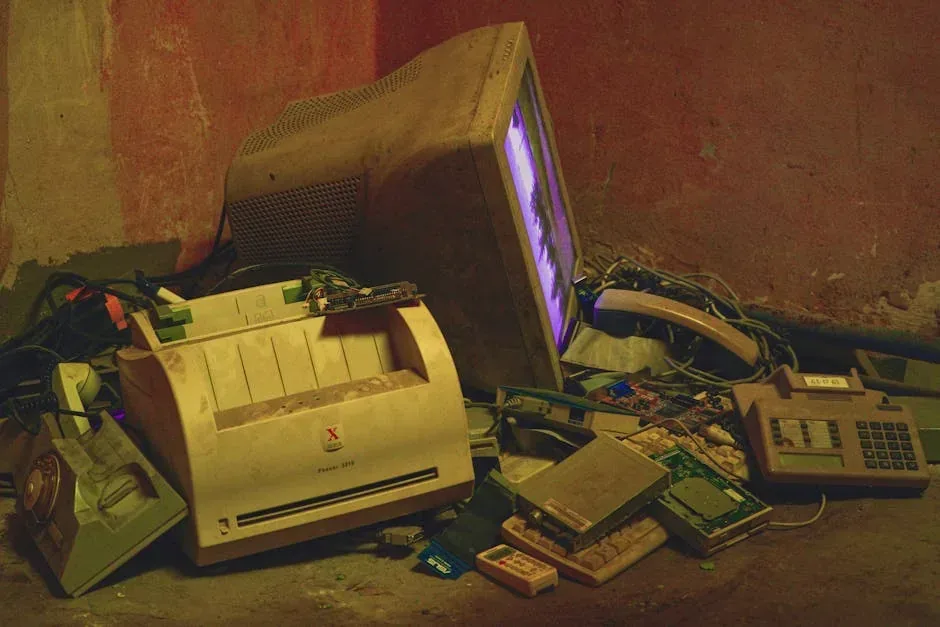
When you throw an old phone in the trash, it doesn't disappear. It goes to a landfill. And that's where a problem most Panamanians never consider begins.
What's inside your electronic devices
Every device you use — phone, laptop, tablet, printer, monitor — contains materials that should never end up in the ground:
- Lead — in solder and CRT screens
- Mercury — in LCD screens and switches
- Cadmium — in older rechargeable batteries
- Lithium — in modern phone and laptop batteries
- Arsenic — in integrated circuits
- Brominated flame retardants — in plastic casings
When electronic equipment ends up in a landfill, these materials leach into the soil and groundwater. It's not a slow process. Panama's tropical rains accelerate leaching. The lead from a single battery can contaminate up to 600,000 liters of water.
The numbers in Panama
Latin America generates approximately 5 million tons of electronic waste per year. Panama, though a small country, contributes proportionally:
- The AMA (Waste Management Authority) estimates thousands of tons of e-waste are generated annually
- Less than 10% receives environmentally sound treatment
- The rest ends up in landfills like Cerro Patacón, in illegal dumps, or simply accumulated in offices and homes
The problem isn't just what gets thrown away — it's what never gets recycled. There are tons of devices sitting in Panamanian homes and offices that will eventually end up in the trash if they're not properly channeled.
Why recycling in Panama is harder than it should be
In countries with advanced recycling systems, there are collection points at every supermarket and government pickup programs. In Panama, options are limited:
- There's no federal e-waste recycling law with real enforcement
- Collection points are few and poorly advertised
- Many people don't know that electronics shouldn't go in regular trash
- Formal recycling companies are scarce and charge for the service
The result: most people hold onto old devices until they move, then throw them away because they don't know what else to do.
What you CAN do
Donate equipment that still works (or can be repaired)
The most effective way to reduce your electronic footprint isn't recycling — it's extending the useful life of devices. A phone you donate to Crezendo can last another 3, 5, even 7 years before it truly needs recycling. That means less mining, less manufacturing, less transport, fewer emissions.
Donate non-working equipment for parts salvage
A phone with a broken screen has a working battery, a board with reusable components, and a speaker someone might need. At Crezendo we disassemble unsalvageable devices and catalog every component. What we can't use internally, we channel to certified recyclers.
Don't throw batteries in the trash
Lithium batteries are the most dangerous. If punctured or exposed to heat, they can catch fire or release toxic gases. Batteries from your old devices should go to a specialized collection point or be donated along with the device so we can handle them properly.
The complete cycle at Crezendo
When you donate a device to Crezendo, it follows one of these paths:
Cycle 1: Direct reuse The device works or is repairable. We restore it, install educational software, and assign it to a student. Extended useful life: 3-7 additional years.
Cycle 2: Component reuse The device isn't repairable but has useful parts. We disassemble, catalog, and use the pieces to repair other devices. Extended useful life: variable — each component keeps working.
Cycle 3: Responsible recycling What's left after extracting everything useful goes to certified recyclers. Metals, plastics, and glass are properly processed. Nothing goes to a landfill.
The simple math
A newly manufactured laptop generates approximately 300 kg of CO2 during production. If you donate that laptop and extend its life by 4 more years, you're preventing someone from needing a new device manufactured. That's 300 kg of CO2 not emitted, plus minerals not extracted, plus plastic not produced.
This isn't a symbolic gesture. It's a real, measurable environmental impact.
What you can donate right now
Anything with a plug, a battery, or a circuit:
- Phones, tablets, laptops, desktops
- Monitors, keyboards, mice
- Cables, chargers, headphones
- Printers, routers, consoles
- Loose batteries (handle with care, don't bend them)
How to donate
Message us on WhatsApp or fill out the contact form. We arrange pickup in Panama City or give you the address for shipping from anywhere in the country or abroad.
Your old equipment isn't trash. It's a resource that still has plenty to give.