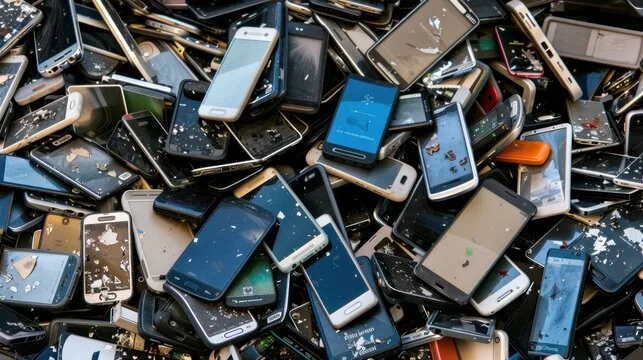
In Panama, approximately 25,000 tons of electronic waste are discarded each year. Most ends up in common landfills, where heavy metals from batteries and circuits leak into the soil and groundwater. A single laptop battery can contaminate up to 600,000 liters of water.
Recycling electronics isn't an optional gesture of good conscience. It's an environmental necessity. And in Panama, although options are limited, they exist.
Where to recycle electronics in Panama
Specialized recycling centers
There are companies in Panama City that process electronic waste responsibly. They separate valuable metals (copper, gold, aluminum) and dispose of toxic components following environmental protocols.
The drawback: many of these centers charge for receiving equipment, especially if they're bulky. And not all operate in the interior of the country.
Extended producer responsibility programs
Some technology brands (especially mobile phone brands) have programs where you can drop off old devices at their official stores. They handle subsequent recycling.
The drawback: they only accept their own brand. You can't take an HP laptop to an Apple store, or a Samsung phone to a Xiaomi store.
Municipal recycling
Some municipalities in Panama have started including specific containers for electronics in their collection programs. However, coverage is irregular and there's not always a guarantee that equipment ends up in proper recycling.
Educational foundations (reuse before recycling)
There's an option superior to recycling: reuse. According to the waste management hierarchy, reusing is preferable to recycling because it preserves the embodied energy in the product's manufacture.
A working laptop can teach ten different students to program before it really needs to be recycled. A phone with a broken screen can be a technician's first repair practice. A console that doesn't read discs can teach hardware diagnostics.
At Crezendo we accept:
- Laptops and desktop computers
- Cell phones and tablets (working or not)
- Video game consoles and controllers
- Monitors, keyboards, mice, and peripherals
- Chargers, cables, and power supplies
- Loose components: hard drives, RAM, network cards
Working equipment is restored and assigned to students. Non-working equipment is used as teaching material in our repair courses. When a component truly can't be used even for teaching, we channel it to specialized recycling.
The difference between recycling and donating
| Aspect | Recycling | Donating for reuse |
|---|---|---|
| Environmental impact | High (avoids landfill) | Very high (avoids landfill + avoids manufacturing new equipment) |
| Social impact | No direct impact | High (education, employment, self-employment) |
| Cost to you | Possible transportation cost | Generally free (coordinated pickup) |
| Traceability | Variable | High (usage and impact reports) |
How to prepare equipment for donation
You don't need to erase everything or format before delivering it. At Crezendo we perform secure data destruction on all storage devices before any reuse. If you prefer to do it yourself, these are the options:
- Windows: Use "Reset this PC" with the option to securely remove files.
- macOS: Use recovery mode and erase the disk with the overwrite option.
- Mechanical hard drives: A tool like DBAN (free) performs complete overwrite.
What not to do with old electronics
- Don't throw them in common trash: It's illegal in many countries and polluting in all of them.
- Don't leave them in the closet indefinitely: Degraded lithium batteries can spontaneously ignite.
- Don't trust your building's "garbage": Most electronic waste that goes to household trash never gets separated for recycling.
The regulatory landscape in Panama
Panama is in the process of strengthening its regulations on electronic waste management. Although there isn't yet a comprehensive federal law like in the European Union, there are growing municipal regulations and pressure from the international community for the country to adopt stricter standards.
Companies that donate equipment for reuse position themselves favorably before future regulations, since reuse is the highest form of waste management according to the international hierarchy.
If you have equipment to recycle or donate
The simplest decision is to contact us. We coordinate pickup in Panama City, provide instructions for shipments from the interior of the country, and have a receiving address in Miami for international donors.
We receive equipment in any state: working, broken, incomplete, old. The only thing we don't accept is for them to end up in a landfill when they can still teach or serve.


