Project management, Agile, and Scrum are related, but they are not synonyms. Before paying for a certification, understand what work you want to do, what experience you already have, and which credential is actually recognized by the organization you care about.
This guide consolidates the former separate pages on project management with no experience, Scrum Master courses, and Agile/Scrum workshops. Keeping them separate only repeated concepts and fragmented the decision.
Start with project management, not the exam
A person managing projects needs to be able to:
- define an objective and a verifiable outcome;
- identify stakeholders and responsibilities;
- sequence work and dependencies;
- estimate time, cost, and capacity with uncertainty made explicit;
- manage risks and changes;
- communicate status, decisions, and blockers;
- close work and learn from what happened.
You can practice all of that before earning a credential. A small, documented project often teaches more than memorizing terminology without making real decisions.
Predictive, agile, and hybrid approaches
A predictive approach tries to plan more detail before execution and controls changes against a baseline. It can be useful when scope can be defined with sufficient stability or when contractual and regulatory obligations are strong.
An agile approach uses shorter cycles, frequent feedback, and adaptation. It does not mean a lack of planning or improvised work.
A hybrid approach combines practices to fit the context. No methodology is automatically superior for every project.
What Scrum is
Scrum is a framework for developing and sustaining complex products through inspection and adaptation. The normative source is the official Scrum Guide.
The guide defines a Scrum Team with three accountabilities: Product Owner, Scrum Master, and Developers. It also defines events and artifacts with associated commitments. Avoid learning Scrum from outdated lists of “roles” or ceremonies copied from a particular organization's implementation.
Scrum is also not synonymous with “Agile.” It can be part of an agile way of working, but Agile covers broader principles and practices.
Which certification should you choose?
There is no universal answer. Use this logic:
If you are starting from zero
Learn the fundamentals first and participate in small projects. An introductory credential can structure your study, but it does not replace practice.
If you already lead projects
Review credentials that assess experience and broad project-management knowledge. The PMP from the Project Management Institute is one of the best-known international certifications, but its eligibility and exam change over time.
PMI launched an updated PMP exam in July 2026 and has also announced later changes to training-hour requirements. Therefore, do not copy eligibility rules from an old blog post: always check the current official PMP page and exam content before paying for training or applying.
If your specific goal is Scrum
Different organizations provide different paths. For example:
- Professional Scrum Master (PSM) from Scrum.org is earned through its assessments; Scrum.org publishes its current criteria on the official PSM certification page.
- Certified ScrumMaster (CSM) from Scrum Alliance requires official training before access to its test; verify current requirements directly with Scrum Alliance.
Do not present PSM and CSM as “the same certification under different names.” They are credentials from different organizations with different processes.
How to choose without wasting money
Before enrolling, answer:
- Does the credential appear in real job descriptions or requirements in your target sector?
- Do you meet its prerequisites today?
- Does the exam assess knowledge you actually need?
- Is training mandatory or simply one preparation option?
- Does the certification expire or require renewal?
- What do the exam, training, renewals, and retakes cost?
- Can you practice on a real project while studying?
The company selling the course should not be your only source for eligibility rules. Verify with the organization that issues the certification.
A practical route when you have no experience
Create a small project and treat it as real:
- define the objective, scope, and success criteria;
- create a backlog or prioritized work list;
- identify risks and dependencies;
- assign responsibilities;
- conduct a weekly review;
- record changes and decisions;
- close with a retrospective and lessons learned.
Then compare what you did with a predictive approach and with Scrum. That teaches why a practice exists, not only its name.
Tools come after the process
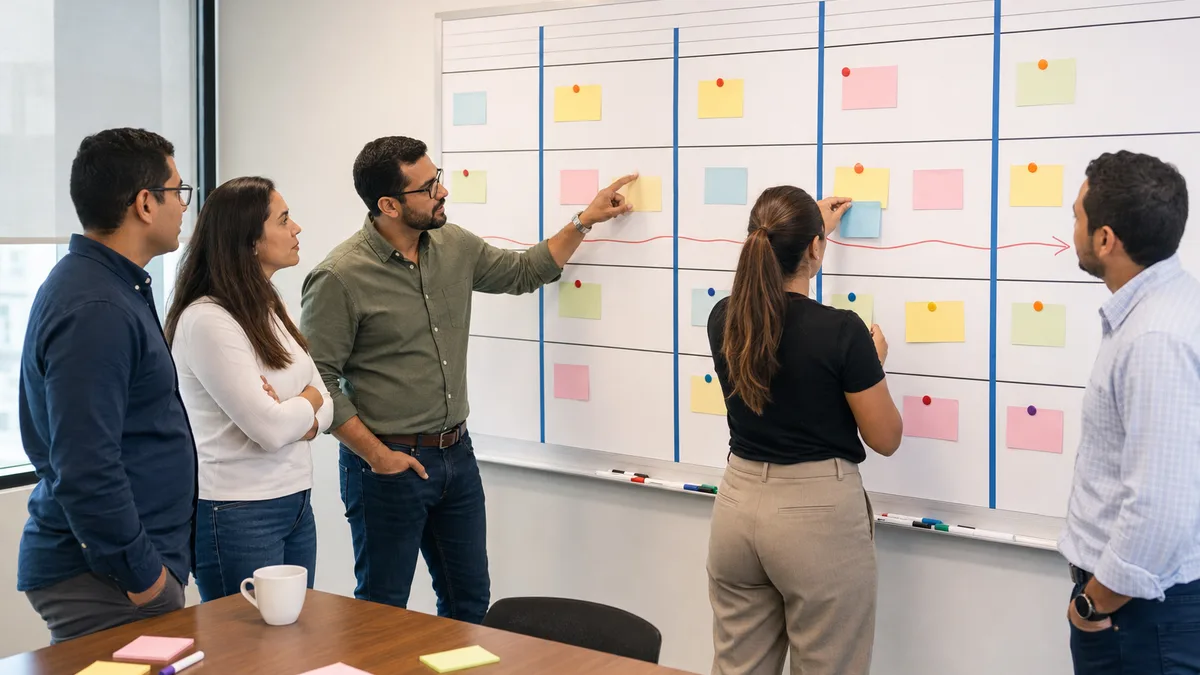
A Kanban board, schedule, spreadsheet, or project-management platform cannot fix a confused process on its own. First define the workflow and information that must exist; then choose the tool.
The guide to free project-management tools can help you compare options without confusing software with methodology.
Common mistakes
- Studying exam questions without understanding real work.
- Calling every daily meeting “Scrum.”
- Assuming Agile means no documentation.
- Implementing ceremonies without a problem to solve.
- Promising exact dates when uncertainty has not been analyzed.
- Treating a certification as a guarantee of employment, salary, or competence.
A credential demonstrates that you completed a particular assessment process. It does not by itself prove how you will manage a specific project.
Does Crezendo currently prepare candidates for PMP or Scrum?
Do not assume so from this article. Crezendo may offer different training depending on availability. If you need individual or company training, use Contact, describe the objective, and ask specifically whether there is a current option for project management, Scrum, or certification preparation.
Frequently asked questions
Do I need a certification to work in project management?
Not universally. Some positions value or require one, while others prioritize experience, sector knowledge, leadership, and results. Review actual requirements for the roles you want.
Is a Scrum Master a project manager?
They are not equivalent accountabilities. Scrum defines specific accountabilities for the Scrum Master within the framework; an organization may also have project-management roles outside Scrum.
Do PMP and Scrum compete with each other?
Not necessarily. PMP addresses project management broadly; Scrum is a specific framework. A person may need one, both, or neither depending on the work.
What are the current PMP requirements?
Check PMI directly. The exam changed in July 2026 and PMI maintains current eligibility on its official site; a number copied here could become outdated.