Imagine a teacher in Panama who can identify in real time which of their 35 students are falling behind in math, before it's too late. That's no longer science fiction — it's what artificial intelligence is starting to do in some classrooms across the country. But while private schools in the capital experiment with smart simulators, most Panamanian schools are still struggling with the basics. Where do we really stand, and where are we headed?
The Impact of AI on Panamanian Education
Panama is in an adaptation phase when it comes to artificial intelligence in its educational system. The push comes from UNESCO guidelines, which promote ethical, human-centered use of AI. The Ministry of Education (MEDUCA) has taken initial steps: in 2023, it launched a pilot program with "intelligent dashboards" for tracking grades and attendance at selected schools.
However, the numbers reveal a troubling gap. According to MEDUCA's own data, only 45% of Panamanian teachers consider themselves competent in digital educational technologies. If nearly half the teaching workforce doesn't feel prepared even with conventional digital tools, integrating AI poses an enormous challenge.
Benefits of AI for Personalized Learning
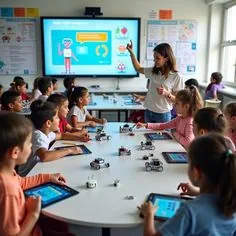
The most tangible promise of AI in education is learning personalization. Instead of a single lesson plan for 35 students with different learning paces, AI-based systems can adjust content, speed, and difficulty level based on each student's individual progress.
In Panama, some private schools in Panama City already use AI-powered simulators for math and science. The reported results are positive: higher student engagement and measurable improvements in academic performance. These simulators don't replace the teacher — they give them precise data on where to intervene.
The result? A teacher who used to guess who needed help now has concrete data to act on. And a student who was bored because they were ahead receives challenges appropriate to their level.
Key Challenges for AI Adoption in Panamanian Schools
The reality is that AI adoption in Panama's public education system faces structural obstacles:
- Insufficient infrastructure: Many schools outside the capital lack stable connectivity or enough devices. You can't run an AI platform without reliable internet — or without devices. If your school needs equipment, donating an old tablet for education can make a difference.
- Teacher digital divide: That 45% digital competency rate is a red flag. Teachers need practical, not theoretical, training in technology tools.
- Lack of clear policies: There is no national curriculum yet that integrates AI as a cross-cutting competency.
- Implementation costs: AI educational platforms require investment, maintenance, and constant updates.
Training Programs and Opportunities for Teachers
It's not all pessimism. There are concrete initiatives moving the needle:
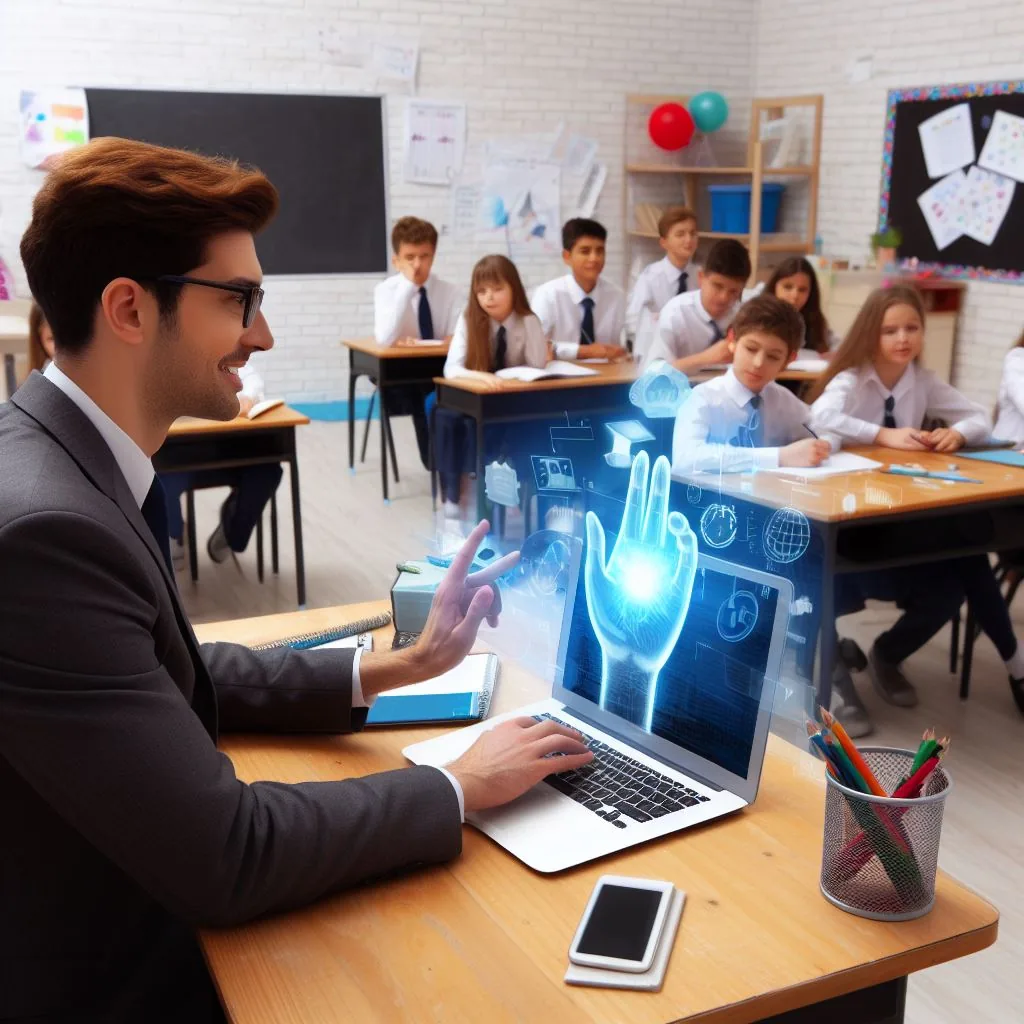
There are various initiatives training educators in the pedagogical use of emerging technologies. At Crezendo, for example, we develop training programs for teachers in digital tools and artificial intelligence, aligned with the UNESCO AI Competency Framework for Teachers, so that every educator can enhance their classes.
Voices like Ernesto León, from Fundación Mentes Brillantes and Edupan, have been advocating for responsible AI integration in Panamanian classrooms. His approach is clear: AI should empower the teacher, not replace them.
For teachers who want to make the leap, developing soft skills like emotional intelligence is just as important as mastering the technology. AI doesn't replace empathy, creativity, or human pedagogical judgment.
Ethical Integration of AI in the Classroom
Talking about AI in education without discussing ethics is dangerous. UNESCO guidelines establish principles that Panama must adopt:
- Transparency: Teachers and students must understand what data AI collects and how it's used.
- Equity: AI cannot deepen the gap between private and public schools.
- Complementarity: AI is a tool, not a replacement for teachers. Human judgment remains irreplaceable.
- Privacy: Data from minors requires special protections.
The central message is that technology without ethics creates more problems than it solves. And financial education for young Panamanians teaches us something parallel: tools are neutral, but their use must be intentional and responsible.
The Future of AI Education in Panama
What's next for Panama? The path forward rests on three pillars:
- Massive teacher training in digital competencies, not just AI but educational technologies in general.
- Infrastructure investment so public schools can access digital platforms without interruptions.
- Clear public policies that regulate AI use in education, protecting students and empowering teachers.
AI isn't going to wait. While Panama moves forward, other countries in the region are already integrating these tools at scale. The question isn't whether AI will reach Panamanian classrooms, but whether we'll be ready when it does.
En Crezendo capacitamos docentes y centros educativos en competencias digitales y tecnológicas. Si tu institución quiere integrar herramientas de IA en su proceso educativo, contáctanos y te contamos cómo podemos ayudarte.