Can a wet phone be donated in Panama? Yes, and Crezendo tells you how
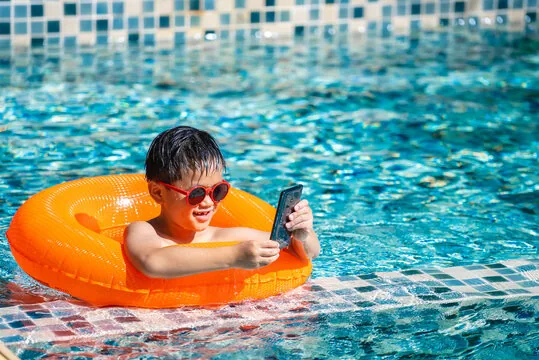
Panama's tropical climate is spectacular, but for technology, it can be a battlefield. Between sudden downpours during the rainy season and the high humidity that accompanies us year-round, it is extremely common for a mobile device to end up exposed to water. The initial panic is inevitable: "Is my data lost?", "Can it be repaired?", or the question many ask when technical service gives them an astronomical quote: "Can I donate a wet phone in Panama?".
The short answer is a resounding yes. At Crezendo, we believe a water-damaged device isn't the end of the story, but the beginning of a new educational opportunity. In this article, we explain why your wet phone has invaluable value for tech education and how you can make your donation safely.
What to do if your phone got wet in Panama? (First Aid Guide)
Before thinking about donation, it's vital that you try to protect the hardware (and your data) by following these steps. What you do in the first 10 minutes can determine if the device will be suitable for refurbishing or if it will be used as technical practice material.
- Turn it off immediately: If the phone is still on, power it down. Don't try to check if it "still works." Water and electricity are a destructive combination for internal circuits.
- Exterior drying: Use a microfiber cloth or an absorbent towel to remove all visible excess water.
- Remove what you can: If your model allows it, remove the battery, SIM card, and microSD memory. This helps air circulate better.
- Avoid rice (The big myth): Although it's the most common advice on the internet, rice is not efficient at extracting internal moisture and, worse, it can introduce dust and starch into the ports, complicating any technical repair attempt.
- Don't charge it: Under no circumstances should you connect a wet phone to power. This will cause an irreversible short circuit.
If after these steps the device does not turn on or has serious screen or battery failures, it's time to consider a higher purpose: educational donation.
Why donate your wet phone to Crezendo?
Many users assume that if a phone doesn't turn on due to water corrosion, it's only good for the trash or for being recycled as electronic scrap. However, for Crezendo, that device is a pedagogical gem.
1. Real Hardware Laboratories
In our technical training workshops in Panama, we teach young people and adults to understand the anatomy of a smartphone. A wet phone is the perfect specimen for:
- Practicing opening devices without damaging flex cables.
- Identifying internal components (processors, camera modules, antennas).
- Learning about the effects of corrosion and how to perform cleaning with isopropyl alcohol in ultrasonic cleaners.
2. Component Recovery
Often, even if the motherboard is water-damaged, other components remain intact. Screens, cameras, speakers, or even chassis can be used to repair other devices that are then given to students with limited resources.
3. Social and Environmental Impact
By donating to Crezendo, you prevent heavy metals from the battery and circuits from ending up in the Cerro Patacón landfill, contaminating our soil and water. At the same time, you are boosting local technological talent.
The process of donating a wet phone to Crezendo
Donating your device is simpler than you imagine. At Crezendo, we have optimized the process so that your generosity doesn't take up your time:
- Initial Contact: Visit our Donations page and complete the short form. Tell us what model it is and that it suffered water damage.
- Preliminary Evaluation: Our team will contact you to coordinate the drop-off. It doesn't matter if the device is completely inoperative or if it has a broken screen in addition to being wet.
- Delivery: We have reception points and, in cases of multiple donations (such as in companies), we can coordinate pickup logistics.
- Donation Certificate: If you require it, we can issue a receipt validating your contribution to our educational programs.
Data security: a crucial step before donating
We understand that the biggest concern when donating a phone —especially one that doesn't turn on and doesn't allow for a "factory reset"— is privacy. What happens to your photos, messages, and accounts?
At Crezendo, we take information security very seriously:
- Wiping Protocols: If the device can be temporarily powered on using professional cleaning techniques, we proceed with a secure data wipe.
- Physical Destruction: If the internal memory is damaged or the device will only be used for parts, we ensure that the storage chip is physically rendered unusable before the device passes into the hands of students.
- Advisory: If you have doubts about how to unlink your iCloud or Google accounts remotely (using "Find My iPhone" or Android's device manager), our team can guide you during the donation process.
What happens to your wet phone after donating it to Crezendo?
Your donation doesn't sit on a shelf. It follows a path of transformation:
- Technical Triage: A Crezendo instructor evaluates if the device has repair potential.
- Classroom Practice: If it's decided to be irreparable, it's assigned to a student. Under supervision, the student learns to diagnose moisture failures.
- Second Life: If it can be repaired, the phone becomes a study tool for someone who doesn't have internet access or their own device for their programming or soft skills courses.
External recycling: the last alternative
Our priority is always Refurbishing and Education. Only when a device has been fully utilized in our workshops and its parts no longer have pedagogical utility, do we proceed with responsible electronic recycling through certified partners in Panama. This ensures that 100% of the device is managed ecologically, but always prioritizing that Crezendo extracts all possible educational value first.
Do you have a phone that "went for a swim" in a drawer? Don't let it become trash. Turn it into education.